Pop-Up, Power Up: How IoT-Enabled POS is Redefining Retail Flexibility
 Global Enterprises
)
On this page
Share:
- Copy this linkLink copied to clipboard
Share:
- Copy this linkLink copied to clipboard
The 2020s have been the decade of the pop-up. The period has marked a fundamental shift in the retail industry: empowered by advances in wireless technology, stores are taking their business mobile and setting up shop in temporary spaces, music festivals, trade shows, and vehicles.
Summarize this article with AI
During the first online retail boom of the early 2000s, many industry insiders feared that the internet would spell the end of brick-and-mortar shops. This has proven wrong so far: in 2025, more people than ever were doing their shopping in person, from high-end fashion stores to the local supermarket. While Amazon and other online platforms haven't destroyed the physical retail industry, the rise of online shopping has pushed brands to explore new ways of doing business and engaging with customers.
Short-term retail (STR)
One method has been the development of pop-ups, or Short-Term Retail (STR): experience-focused temporary stores located in high-traffic areas like malls and transit hubs. Today, independent stores and established brands can take their products on the road, responding to market trends. STR allows brands to explore new regions and gather invaluable market research, without the investment and risk of establishing a permanent store.
Recent technological advances have provided brands and retailers with unprecedented flexibility on how, when, and where to sell goods and boost their public profile.
This flexibility is made possible by the Internet of Things (IoT) and eSIMs. These developments have addressed many of the challenges of short-term retail and prepared businesses for sustainable digital transformation.
The Internet of Things in the retail industry
The Internet of Things is a broad term that refers to any devices that communicate via a wireless standard like Bluetooth, RFID, or mobile data. This encompasses everything from industrial machinery to smart home devices and connected cars.
For retail spaces, the IoT has enabled the rapid rise of wireless Point-of-Sale (POS) terminals, near-field communication (NFC) contactless card payments, and the remote worldwide deployment of new mobile devices.
The new retail frontier: key advantages of short-term retail
Visual advertising: The visible location of pop-ups, usually in areas with heavy footfall, means the stores themselves fulfil the dual role of retail establishment and physical advertisement. In many cases, STR stores are as much marketing campaigns as they are revenue streams.
Experimental examples, like the vast trompe-l'œil pop-up Prada constructed in central Paris, demonstrate the creative lengths brands will go to with their short-term retail spaces. “Experience-focused” pop-ups like these are often designed in a bid for virality, with every fitting and display carefully arranged for the lens of social media.
Seasonality: Pop-ups are often a feature of temporary events like trade shows and music festivals. This allows brands to advertise their products to a high volume of targeted customers in a short space of time, creating maximal exposure with minimal rent and capitalizing on brief trends without the effort and cost of opening a permanent location (often in city center locations where annual rent would be out of the question).
Rapid market entry: This model allows invited companies to explore new markets without committing to the opening of a flagship store. The French fashion label Maison Schiaparelli recently constructed a golden, keyhole-shaped pop-up in Shanghai, as the brand’s debut establishment in China. The striking design and high-profile location in Shanghai’s Plaza 66 shopping center ensured heightened brand awareness, without the need for long-term rental or risky outlays on a permanent space.
While STR formats can often be a low-risk, high-reward strategy for retailers, they’re not without their drawbacks. Key challenges include staffing, ensuring in-store connectivity, and maintaining data security. By partnering with an international telecoms and retail partner like 1GLOBAL, brands can directly address these issues and fully harness the benefits of temporary stores.
Solving short-term retail challenges with 1GLOBAL
1. Setting up and distributing wireless POS systems
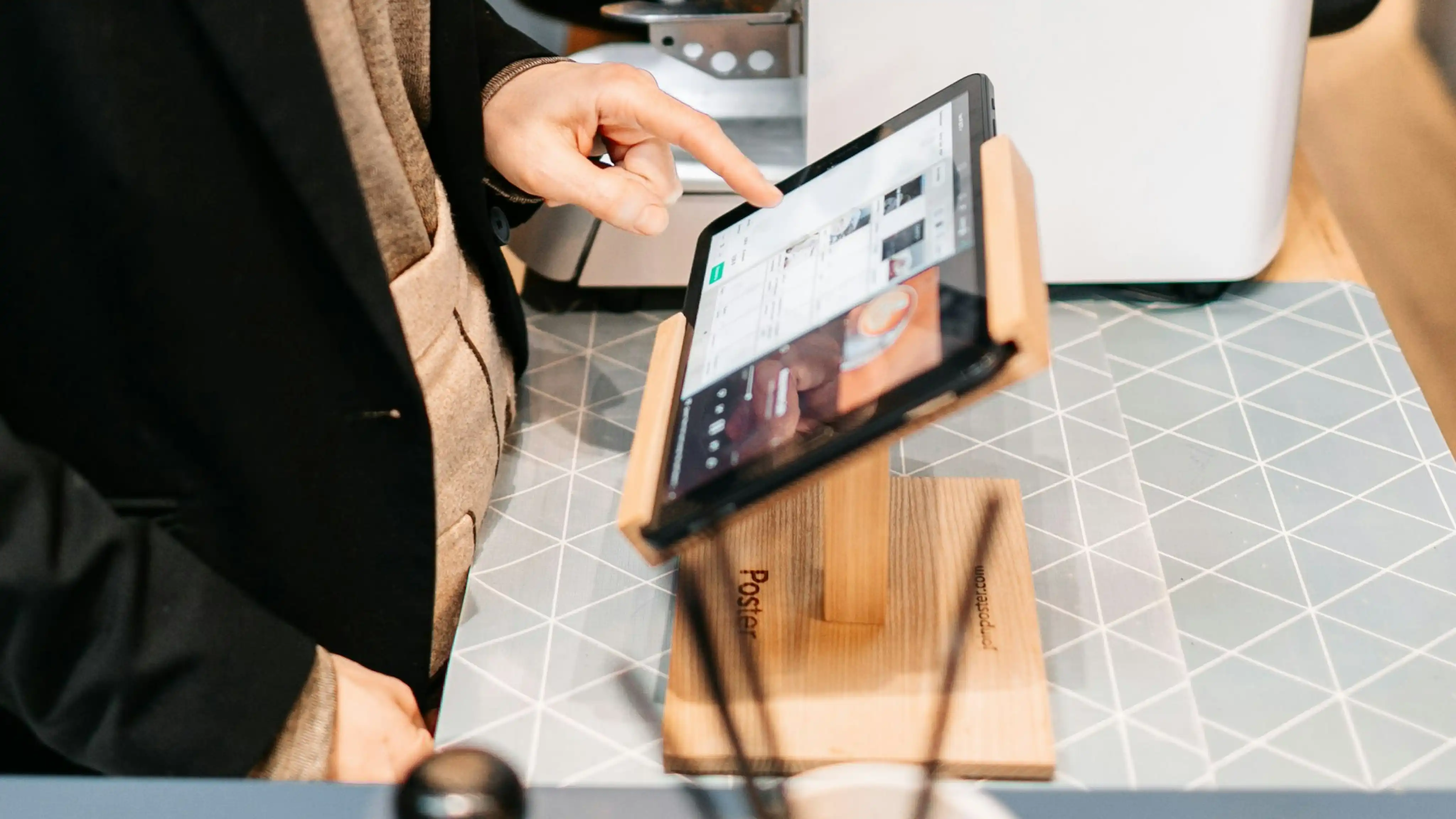
Behind every spontaneous-seeming pop-up lies careful preparation. One of the most pressing challenges when operating a short-term retail space is ensuring that all point-of-sale (POS) terminals are connected to a reliable network and can operate wirelessly with minimal setup time, configuration, or costly installation. Another advantage of temporary retail is the minimal initial investment required to establish a fully-functional store – this is nullified by costly and time-consuming POS setup.
1GLOBAL Enterprise offers true out-of-the-box connectivity for eSIM-enabled POS systems, including smartphones and tablets. We offer Zero-touch setup for iOS POS devices: the user simply opens the device, signs in, and the device is automatically configured, including a unique eSIM profile, all required apps, and company-specific configurations. The end users can start processing transactions within minutes of unboxing their device.
This provides true flexibility and enables businesses to remotely deploy and activate new POS devices around the world, an essential advantage in the reactive world of short-term retail.
2. Quick employee training
The temporary retail space allows brands to rapidly react to new market trends and seasonal events. Doing so often requires last-minute decisions and tight deadlines. Many spaces rely on the assistance of temporary staff, especially when exploring new markets or regions of operation.
Training and onboarding new team members for temporary events can be a significant investment. Zero-touch connectivity services from 1GLOBAL slash these costs by providing instant, plug-and-play mobile connectivity to team members anywhere in the world.
By delivering out-of-the-box connectivity on a familiar UX, 1GLOBAL services not only reduce overall training time and user effort, they also help to deliver a heightened customer experience. On-site staff are able to refocus their time and effort on attending to customers, rather than wrestling with logins, unfamiliar user interfaces, and complex onboarding procedures. iOS POS systems are becoming an increasingly common feature of the retail landscape, with services like 1GLOBAL specifically designed to cater to this new phase of wireless POS connectivity.
3. Connecting POS terminals without Wi-Fi
Once a site has been established for a pop-up store, the next step is to ensure the provision of essential services like electricity, lighting, and mobile connectivity. Ideally, wireless POS terminals will be connected to a reliable, secure, and fast mobile network. A data connection is preferable to Wi-Fi as it provides the store organizers with full control of their connectivity and eliminates the need for them to connect to an unknown Wi-Fi network (and configure this on all devices). Too often, pop-up operators become reliant on a single internet connection, over which the speed, coverage, and security they have no control.
A redundant mobile network like 1GLOBAL offers high-speed coverage across 190+ countries on a single contract basis. In the case of travelling pop-ups, this means floor staff can enjoy the same high level of mobile POS connectivity wherever they are in the world, without the need to reconfigure each POS device in every new location and run the security and speed risks that come from connecting to a shared Wi-Fi network.
4. Avoiding network downtime
Other than security concerns, relying on an external Wi-Fi connection for POS connectivity exposes brands to a heightened risk of network outages. In the age of contactless transactions, signal outages can be disastrous for retailers. They eat into the transient window of time that pop-ups have to do business. Switching to cash transactions is usually not an option for short-term retail, as the limited space of pop-ups makes them ill-suited to storing and processing paper money.
A redundant mobile connection, with access to multiple local networks, offers a secure alternative. Services like SafeRetail by 1GLOBAL directly solve the problem of wireless POS downtime.
SafeRetail by 1GLOBAL
SafeRetail is a new service from 1GLOBAL that delivers uninterrupted wireless connectivity for POS systems. By connecting terminals to the 1GLOBAL worldwide mobile network, SafeRetail ensures a constant connection, even in the event of a local network outage. The 1GLOBAL network comprises over 600 local partner networks across 190+ countries, with a minimum of three available networks per country.
How SafeRetail works
Constant connectivity: In the event of a local network outage, POS terminals will instantly and automatically switch to the next strongest local network, eliminating the risk of downtime and allowing business to continue as usual.
A backup or primary connection: Businesses can choose to employ SafeRetail as a backup connectivity source in case of a Wi-Fi or local network failure, or as a primary source of POS connectivity.
International reach: SafeRetail provides companies with connectivity in 190+ countries, on a single contract. This is ideal for multinational brands and retailers looking to expand into new regions. One agreement covers all stores, pop-ups, and events worldwide.
Scalable: SafeRetail connectivity agreements are designed to be scalable, continually adapting to the brand data requirements. This complements the responsive nature of short-term retail and supports brands that require reactive retail solutions to new trends and events. SafeRetail ensures that iOS POS systems never lose network connection, even during a Wi-Fi or local mobile network failure. SafeRetail connects every POS system in all stores worldwide to the 1GLOBAL mobile network. In the event of a signal outage, these systems will automatically reconnect to the best available local mobile network, avoiding network downtime.
One management platform for all devices and stores
To support a network of pop-up stores and temporary establishments, often in disparate locations, 1GLOBAL offers a single, centralized management platform for all connected devices and POS terminals. This provides in-depth analytics and real-time insights on all data usage worldwide, integrating with any existing mobile device management (MDM) platform thanks to 1GLOBAL’s Jamf Pro integration. For retailers, this ensures the flexibility and freedom to rapidly organize and set up temporary stores, knowing they’ll be backed up by an easy-to-use management platform and reliable mobile connection.
To explore how SafeRetail can benefit your business, contact our team today.
About 1GLOBAL
1GLOBAL is a distinguished international provider of specialty telecommunications services catering to Global Enterprises, Financial Institutions, IoT, Mobile Operators and Tech & Travel companies. 1GLOBAL is an eSIM pioneer, a fully accredited and GSMA-certified telco, an MVNE, and a full MVNO in ten countries, fully regulated in 42 countries, and covers 190+ countries.
1GLOBAL delivers comprehensive communication solutions that encompass Voice, Data & SMS - all supported by a unique global core network. Its constantly expanding portfolio of advanced products and services includes MVNE services, white label eSIMs, Connectivity Solutions, Compliance and Recording, Consumer & M2M SIM Provisioning and an Entitlement Server.

 is a content specialist and creative copywriter covering tech, IoT, and eSIM topics for 1GLOBAL. Since completing a BSc in Environmental Conservation, he has worked in the arts, science, and NGO sectors. He lives and works in Berlin.
)
)
)

