5 IoT Predictions for the Next 5 Years
 IoT
IoT)
On this page
Share:
- Copy this linkLink copied to clipboard
Share:
- Copy this linkLink copied to clipboard
Over the last five years, the Internet of Things (IoT) industry valuation has nearly doubled — a growth rate that will only increase over the next five.
Summarize this article with AI
Practically every industry employs IoT in some capacity, while connected devices have successfully made the leap from the commercial sphere to private life. IoT is now equally associated with smart homes and consumer gadgetry as it is with industrial sensors and wireless manufacturing.
As connected devices continue to permeate nearly every aspect of modern life, they continue to present new challenges and solutions. From managing spiking global data demand to ensuring sustainable manufacturing and distribution processes, IoT companies must respond to these concerns and harness new trends and technologies to stay viable in a highly competitive field.
We explore five of the many ways in which IoT will soon change, and be changed by, environmental, social, and economic factors.
1. The rise of 5G networks
By the end of 2024, broadband (4G and 5G) IoT connections served 2 billion users, or approximately a quarter of the world’s population. 5G networks, in particular, have proven valuable due to their ability to handle greater data volumes and demanding tasks like HD video streaming and real-time data transfer.
5G mobile networks also provide significantly lower latencies (the delay between an input and the effect of that input over a wireless connection). This is essential to serving the world’s mobile data usage – analysts estimate that around three-quarters of the world’s population consumes mobile data, on average, every 18 seconds.
Crucially, 5G provides a potential solution to the bandwidth bottleneck the connected world has been lurching towards. By handling much greater data volumes on the same bandwidth as older networks like 3G and 4G, 5G can help to serve the spiralling global demand and ease pressure on network operators.
As demand for the capabilities of 5G continues to grow, operators are expected to scale back their 3G availability and reassign the spectrum to the newer standard.
For emerging IoT-based industries like telemedicine or connected cars, the high speeds and low latencies of 5G networks are essential to performing time-critical functions. As these industries grow in tandem with 5G, the standard will see widespread adoption internationally. IoT businesses must embrace the new format to remain at the forefront of an increasingly competitive market. Long-term strategic considerations like scalability and internationalization will become essential metrics of success in the future of IoT.
2. Environmental and social concerns
The scale of the data demand growth is reflected by the rising environmental impact of the IoT. The number of connected devices will see a twofold increase over the next decade, placing additional environmental strain through material procurement, manufacturing, and logistics. This poses serious environmental concerns for the IoT industry and any company using wireless devices. To create a truly sustainable business model, mobile tech and telecom brands must act now to pursue environmentally-friendly manufacturing and distribution processes for new devices and server facilities. Delivering a more sustainable IoT ecosystem is key to the industry’s survival.
One method is by harnessing new technologies to serve growing demand with reduced environmental impact. Embedded SIMs, or eSIMs, are an example. eSIMs are software-based SIM profiles, stored on a chip within the body of a device, rather than inserted via a plastic card. As eSIMs remove the material required for SIM cards from the device manufacturing process, they help to reduce total industry e-waste, packaging, and transport costs.
While eSIMs alone aren’t enough to create a sustainable IoT industry, they are a viable example of how the sector can utilize new technologies that deliver greater efficiency while reducing overall environmental impact.
From a social sustainability perspective, the worldwide uptake of wireless connected devices poses a risk of increasing social stratification, particularly in regards to polarization between nations with differing mobile infrastructures. Countries with less complete networks are unable to access the same benefits of IoT as more developed nations, potentially widening the global wealth gap. Within nations, care must be taken to ensure equal access to high-speed mobile networks and the advantages they offer.
Smart cities offer examples of how 5G networks and IoT principles can be adopted to serve a wider public good, while the pace of IoT adoption is growing globally (the three leading providers of cellular IoT connectivity services are now all based in mainland China). Nevertheless, the distribution of 5G networks worldwide is still highly region-dependent.
3. IoT and the automotive industry
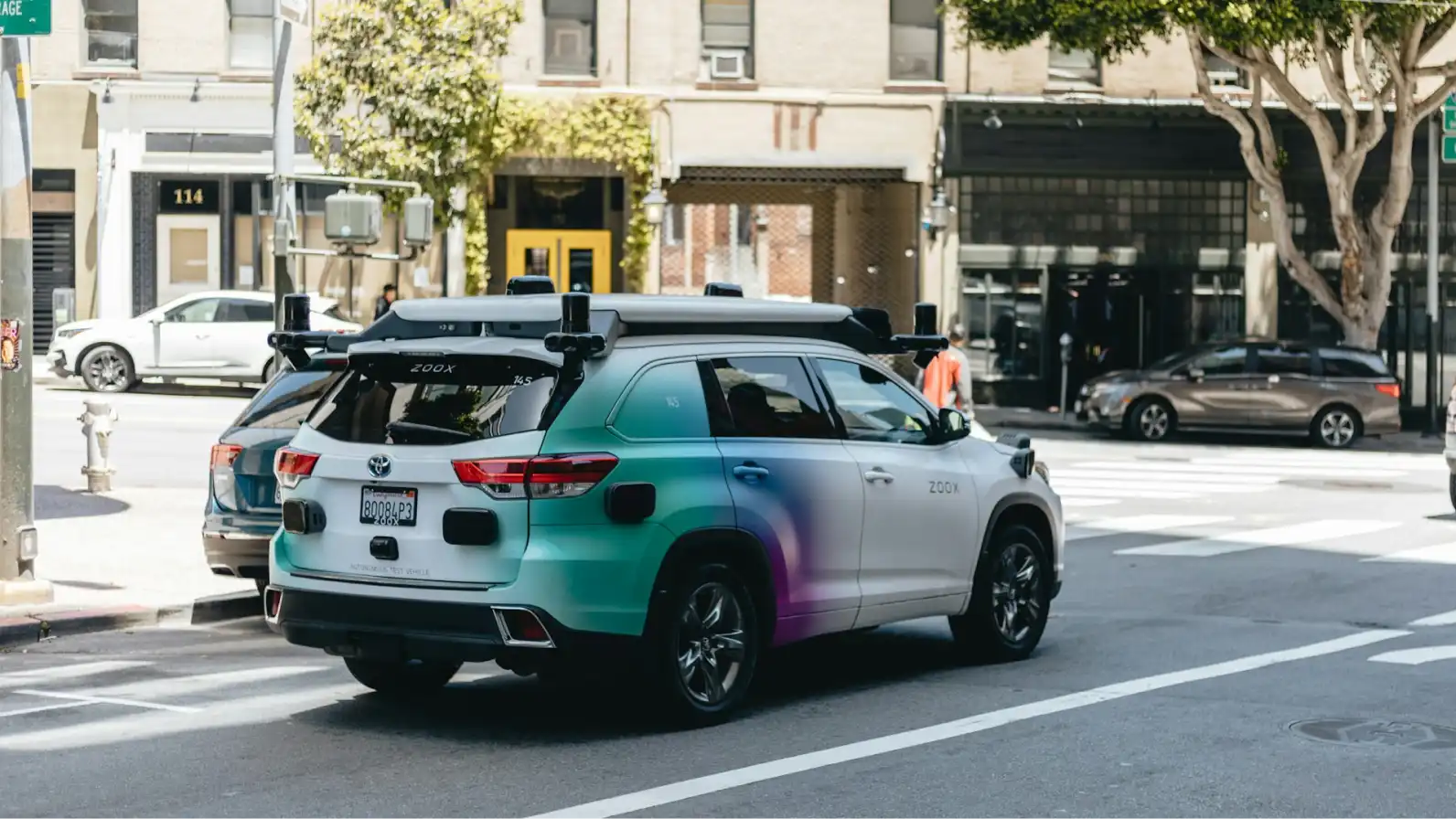
One of the fastest-growing sectors within the IoT space is the connected car space. A decade ago, cloud connectivity and wireless sensors were almost exclusively confined to prototypes and concept models. By 2030, these features are expected to be present in 90% of all new cars. IoT connected car services range from essential aspects of navigation, fuel management, and steering assistance to climate control and in-car entertainment.
Some features, like parking-assistance cameras, are already common sights on new models. Under the hood, onboard computers like telematics control units (TCUs) keep vehicles connected to the cloud, providing real-time location data and assisting everything from parking to in-car calling. In 2024 alone, Berg Insights observed that almost 80% of new cars sold featured some form of embedded telematics.
Like the wider IoT industry, a focus on the environment is essential to the future of connected cars. New developments like IoT-assisted hybrid engines and smart electric vehicle charging signify how IoT could enable the phasing out of fossil fuels from the automotive industry. Real-time location and status data will also be essential to the growing field of self-driving cars and autonomous vehicles, or AVs.
While driverless cars are still in their infancy as a product, the number of these on the road will accelerate over the next five years: by 2030, 1 of every 10 new cars is expected to be self-driving. To achieve this safely, extremely reliable and low-latency connectivity is required, with 0 risk of network outages.
4. GenAI and IoT
In such a field littered with technical terms, observers should treat anything prefaced by the term “AI-powered” with caution. As public awareness of generative artificial intelligence (GenAI) and large language models (LLMs) grows, so too are brands eagerly incorporating AI assistants, claiming “.ai” domains, or retrofitting the term on to any existing (and unchanged) automated processes.
As the AI industry gathers pace, predictors of future success remain sharply divided: insiders have forecast everything from a foundational tech revolution to echoes of the 2000s dotcom bubble. Nevertheless, the recent AI arms race has uncovered some genuinely valuable innovations for the IoT.
What is certain is that genuine generative AI is being introduced into the IoT ecosystem, both through recent AI startups and established brands like Ericsson, Vodafone, and Amazon Web Services. Artificial intelligence and machine learning offer the ability to sift through the mountains of data generated by IoT devices and sensors to detect patterns, make real-time decisions, and automate processes within them. In turn, this data can be used to further train the neural networks to deliver increasingly capable AI products. Any truly worthwhile fusion of GenAI and IoT will need to be environmentally, socially, and economically sustainable.
5. Edge computing
Employing scalable solutions that will continue to grow to meet demand is now a vital consideration for IoT companies. Doing so requires the inclusion of pioneering software technologies, like remote eSIM distribution and, more recently, edge computing.
Edge computing is a broad term that describes several approaches to physically minimize the distance between data processing facilities and users in a wireless computer network. These essentially bring servers as close to the end user as possible, in a bid to reduce latency. This is in contrast to traditional data centers or cloud computing, where decisions and data are processed in a centralized “cloud” server, often located far from the end device.
5G networks have enabled high-data and real-time processes to instead be performed on nearby servers, minimizing latency and allowing reliable performance of time-critical computing tasks. Going forward, many IoT companies are likely to follow a divided approach of assigning crucial and time-pressing functions to edge computing servers, and less critical tasks through a centralized or shared cloud server.
Like GenAI, edge computing has recently taken on a life of its own as an industry buzzword. It can be tricky to parse true use cases and valuable examples of the technology from marketing material.
The growth of edge computing is integral to the growth of IoT. As the desire for real-time wireless communication becomes increasingly common, particularly in critical functions like vehicles or medicine, low latency becomes a need rather than an advantage.
Edge computing can be part of the solution. Challenges for edge computing and the IoT still remain, including ensuring network interoperability, international coverage, and security.
Building secure and scalable IoT solutions with 1GLOBAL
These security challenges apply to the wider IoT. As commercial device fleets and consumer IoT products grow more connected and sophisticated, so too does the potential for cyberattack. Robust security measures, such as regular security updates, are required for emerging IoT processes.
The opportunities for IoT in the coming years are immense. Tech brands wishing to incorporate truly scalable IoT services and join this wave require an expert partner like 1GLOBAL. Learn more about how we help leading IoT brands, or contact our team today.
About 1GLOBAL
1GLOBAL is a distinguished international provider of specialty telecommunications services catering to Global Enterprises, Financial Institutions, IoT, Mobile Operators and Tech & Travel companies. 1GLOBAL is an eSIM pioneer, a fully accredited and GSMA-certified telco, an MVNE, and a full MVNO in ten countries, fully regulated in 42 countries, and covers 190+ countries.
1GLOBAL delivers comprehensive communication solutions that encompass Voice, Data & SMS - all supported by a unique global core network. Its constantly expanding portfolio of advanced products and services includes MVNE services, white label eSIMs, Connectivity Solutions, Compliance and Recording, Consumer & M2M SIM Provisioning and an Entitlement Server.

 is a content specialist and creative copywriter covering tech, IoT, and eSIM topics for 1GLOBAL. Since completing a BSc in Environmental Conservation, he has worked in the arts, science, and NGO sectors. He lives and works in Berlin.
)
)
)

