The Environmental Benefits of Cloud-Based Entitlement Servers
 Mobile Operators
)
Share:
- Copy this linkLink copied to clipboard
The eSIM is fast becoming the standard SIM format – for operators, this means delivering on instant activation of new devices. Out-of-the-box eSIM connectivity is now an expectation, not an add-on.
Summarize this article with AI
As eSIMs evolve from niche industrial tools to the backbone of the contemporary mobile industry, operators are increasingly turning their attention to the role of entitlement servers.
The processing power demanded by modern mobile demand has had a significant environmental impact. Previously, the energy usage caused by rising demand for computing power was partially offset by the rising productivity the computers allowed, a principle known as Moore’s Law. This increasingly queried concept will now likely be resigned to history as spikes in demand, catalyzed by cryptocurrency and AI, have resulted in power consumption far outstripping humanity’s ability to manage the consequences.
From telecommunications to manufacturing, industries are turning to digital solutions like 5G networks and cloud-based servers to develop scalable network solutions that adapt to growing customer bases.
Here, we examine some of the sustainability challenges the telecommunications industry faces – and how cloud-based entitlement servers can offer a step in the right direction.
What is an entitlement server?
Original Equipment Manufacturers (OEMs) like Apple or Samsung must ensure that their products feature out-of-the-box compatibility with the buyer’s desired carrier or service provider.
In order to deliver these instant eSIM device activation and management services, operators require an entitlement server. An entitlement server is a set of standards that manages the distribution, configuration, and activation of a mobile operator’s services to a customer’s devices. They ensure that the access rights of a user match the required service, as well as overseeing the configuration and updates of new and existing services to different device types.
Entitlement servers are foundational to the eSIM-based future of mobile telecoms. As the global transition from SIM cards to eSIM continues to gather pace, mobile operators are hurrying to implement scalable services that can cater to this growing demand, while also supporting the increase in smartwatches and tablet usage. A cloud-based solution allows operators to fully leverage the potential of 5G, which is cloud-native by design.
For carriers, this platform (entitlement server) has already become one of the key service and network monetization enablers, poised to sustain that advanced evolutionary momentum into the future.
In a more pressing sense, cloud-based entitlement servers may offer environmental advantages over physical alternatives.
Are cloud-based entitlement servers more sustainable?
When digital solutions are proposed as environmentally-friendly fixes to physical ones, it’s worth digging deeper into their true environmental impact. In their Green Data Centre Policy, the European Union states, “Digital technologies can offer green solutions to different sectors of the economy. Equally important is the ‘greening’ of the digital sector itself.”
To this end, shared cloud-based servers and eSIMs hold some environmental and operational advantages over previous iterations. Consolidating processes into shared cloud data servers may offer a partial solution by slowing the overall rate of energy consumption.
The cloud transition
Cloud-based entitlement servers are just one example of a wider industry shift: over the last five years, telecoms operators have begun to transition their services, including entitlement servers, from self-administered on-premise server “farms” and hardware arrays to fully virtual, scalable, cloud-based formats hosted by third-party companies like Amazon Web Services (AWS) or Microsoft Cloud.
One key driver of the cloud transition has been the launch of 5G data networks: the speed and capacity of the new format have created a new world of mobile data usage, facilitating wireless connections at ultra-high speeds and low latencies. A cloud-based network allows operators to respond to consumer demand and scale as needed, on demand, rather than estimating future data demands and physically building the hardware infrastructure to support this demand (and rebuilding as demand increases over time).
This transition has been further encouraged by the edge computing industry. Edge computing servers are physically located closer to the end-user, in a bid to reduce latency and improve performance of high-demand tasks.
The larger data capacities and lower latencies required to power recent wireless developments like AI queries in real-time hinge on 5G networks and edge computing, both of which require more sustainable hosting solutions.
Building sustainable mobile infrastructure with the cloud
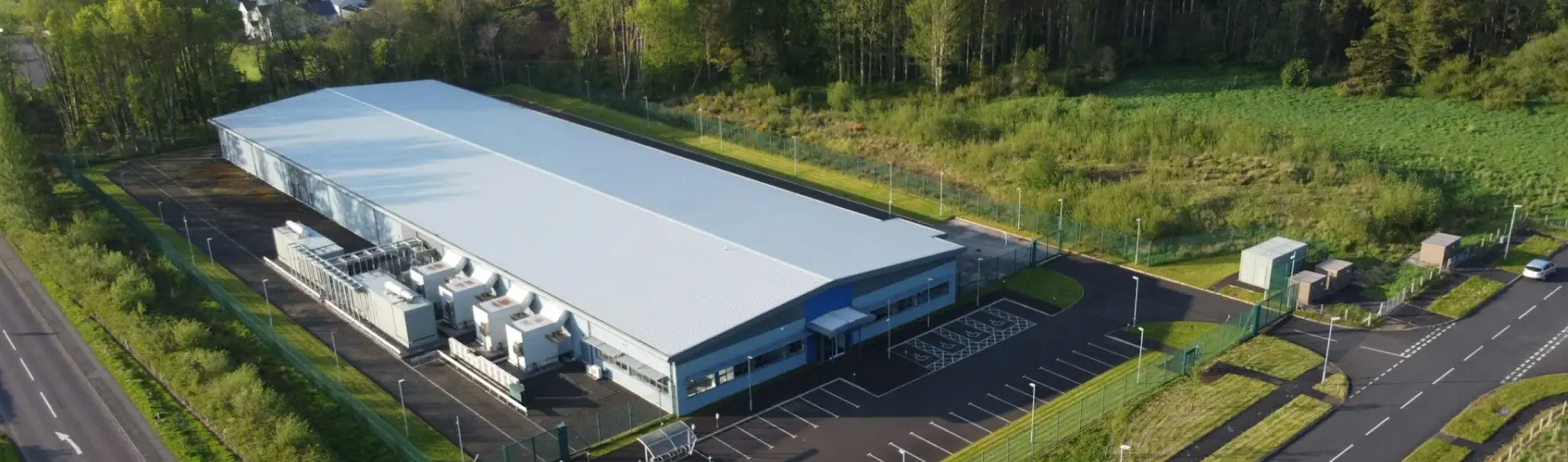
While cloud-based servers offer users a more reliable, fast, and scalable hosting solution for their network, the environmental impact must be studied closely. Currently, cloud servers likely offer a more sustainable alternative to private physical servers, mainly due to their increased energy efficiency.
In a cloud telecom network, power is only required on demand, rather than the “always-on” status of physical servers. In a recent report, CapGemini estimates that a global shift to cloud hosting could eliminate up to 5% of all greenhouse gas emissions.
However, the rapid rise in data centers has been accompanied by a rise in power consumption: In 2018, the energy consumption of data centres in the EU was 76.8 TWh. This is expected to rise to 98,52 TWh by 2030, a 28% increase. A significant portion of this increase is due to edge computing. In 2018, edge data centers accounted for 2% of the energy used by data centers in Europe. Now, it’s closer to 12%. While cloud servers are individually more efficient and less wasteful than on-premise physical servers, collectively, the industry consumes vast quantities of power.
While the cloud computing transition isn’t generally motivated by sustainability concerns, there are aspects of cloud-based operation and 5G networks that are more environmentally friendly than previous models. Exploring these potential solutions and acting fast to regulate the market are key to building a more sustainable telco industry.
Energy efficiency in the cloud
Consolidating features into a single server, rather than developing different standards, operating out of different areas, increases the mobile industry's efficiency – a vital consideration when preparing for the spiralling global data demand.
Running services like entitlement servers as cloud-native functions (CNFs) on shared, energy-efficient telecom infrastructure in a large-scale data center not only consolidates and simplifies the measurement of a company’s sustainability, but it also delivers more efficient performance.
The ability to scale efficiently is a key advantage of cloud services. Older on-premise servers need to be manually scaled according to demand, requiring significant administrative and operational overhead.
For operators, this often presented a catch-22: either they over-invest in the construction, transport, installation, and operation of new servers that may never be used to full capacity, or they risk downtime, slowed operations, and physical damage to overloaded servers during peak times. Cloud servers respond to demand, scaling as required, and eliminate the emissions generated by excess on-premises servers and reducing e-waste in telecom networks.
Cloud services and mobile operators
For mobile networks, the switch to cloud is already in full effect.
Rakuten was the first major telco to fully upgrade its core network to the cloud in 2021, in anticipation of the launch of 5G. In the following years, operators including AT&T and O2 Telefonica have followed suit, moving their 5G core networks to Amazon, Microsoft, and Google-operated cloud hosting platforms.
On-premises entitlement servers require dedicated servers, storage, and networking equipment.
Cloud solutions consolidate resources in shared, energy-efficient data centers.
As consumer and commercial mobile capabilities continue to grow, new methods are constantly being explored to supply more mobile data at higher speeds. Today, it’s not unusual for customers to own more than one cellular device at a time, including smartwatches, cellular tablets, and fitness trackers. Tools like a cloud-based entitlement server ensure a smooth and secure customer experience across multiple device types.
1GLOBAL Entitlement Server
The 1GLOBAL Entitlement Server is a cloud-native solution that is designed with the 5G future of telecoms in mind. As a CNF, the 1GLOBAL Entitlement Server requires no physical infrastructure or investment on the client side, facilitating rapid go-to-market and minimizing manufacturing, transportation, and waste emissions.
The 1GLOBAL Entitlement Server is recognized as an industry-leading service, orchestrating multiple complex authorization and configuration processes while simplifying connectivity for the operator and the end-user.
The service uses a suite of programming interfaces (known as APIs) to remotely configure a carrier’s services on any devices that use the network. In combination with other technologies like Device Intelligence, it identifies authorized devices, ensuring the correct software features are distributed to the correct people, with minimal end-user input.
VoWiFi, eSIMs, and Entitlement Servers
As well as being a cloud-native function, an entitlement server like 1GLOBAL’s supports more energy-efficient mobile services for customers, including Wi-Fi calling, or VoWiFi (voice over Wi-Fi).
Entitlement Servers like 1GLOBAL provision and manage VoWiFi settings, allowing subscribers access to Wi-Fi calling, one of the observable environmental benefits of cloud computing.
Wi-Fi calling only needs enough power to reach the nearest access point – in built-up areas, this is usually meters away. Offering both cellular and Wi-Fi calling options can reduce the power consumption per user.
Entitlement servers also play an essential role in the promotion of eSIMs over physical SIM cards. Replacing the procurement, manufacture, transport, and packaging of physical SIMs with an eSIM-based model (facilitated by entitlement servers) can contribute to a more sustainable mobile industry.
The future of green telecom solutions
Cloud servers and data centers are already deeply embedded within the telecommunications industry. Regulating their use will be key to delivering a sustainable wireless sector – policies like the EU’s directive on green data centers have begun to address this, though the pace of change, fuelled by high-consumption fields like AI, machine learning, and blockchain companies, is outpacing regulatory measures.
In Denmark, for example, the energy used by data centres is expected to increase six-fold by 2030. Combatting this rise requires immediate action, both inter- and intranationally.
Mobile operators themselves must also search for actions they can take in-house. Switching to eSIMs is one option, while transitioning entitlement server operations away from private, on-premise servers and to larger shared cloud facilities is another. While these are only tiny course corrections, they illustrate how the adoption of energy-efficient solutions can deliver a smoother user experience and greater operational agility.
Learn more about 1GLOBAL Entitlement Server solutions, or contact our team directly to discuss using the service with your business.
About 1GLOBAL
1GLOBAL is a distinguished international provider of specialty telecommunications services catering to Global Enterprises, Financial Institutions, IoT, Mobile Operators and Tech & Travel companies. 1GLOBAL is an eSIM pioneer, a fully accredited and GSMA-certified telco, an MVNE, and a full MVNO in ten countries, fully regulated in 42 countries, and covers 190+ countries.
1GLOBAL delivers comprehensive communication solutions that encompass Voice, Data & SMS - all supported by a unique global core network. Its constantly expanding portfolio of advanced products and services includes MVNE services, white label eSIMs, Connectivity Solutions, Compliance and Recording, Consumer & M2M SIM Provisioning and an Entitlement Server.

 is a content specialist and creative copywriter covering tech, IoT, and eSIM topics for 1GLOBAL. Since completing a BSc in Environmental Conservation, he has worked in the arts, science, and NGO sectors. He lives and works in Berlin.
)
)
)

