Connectivity Under Fire: How Technology Holds Steady Amid Conflict and Crisis
 General
)
On this page
- The Constant Drive for Data Security
- The Evolution of Connectivity in Crisis
- Legacy of the Cold War
- The Telco Threat Matrix
- Hybrid War in Latvia: A Case Study of Financial Resilience
- Legislative and Physical Hardening
- Offline Payments
- Roam like at Home on the Eastern Front
- Democratizing Connectivity During Crisis
- Connectivity as a Lifeline
Share:
- Copy this linkLink copied to clipboard
Share:
- Copy this linkLink copied to clipboard
Buckminster Fuller, visionary theorist and inventor remembered for his geodesic (the shortest possible line between two points on a sphere) designs and dedication to solving global problems, is widely credited with saying "humanity is acquiring all the right technology for all the wrong reasons."
Summarize this article with AI
It’s a popularly paraphrased misquote, which tells you a lot about what humanity is doing with ‘all the right technology’ – but the point is still valid. The vast majority of technology developed during the 20th century, which now underpins our daily lives, was developed in response to conflict and disaster.
GPS was originally made for guiding warheads. Microwave ovens were discovered accidentally by an engineer working on radar during World War II. Even benign medical staples like EpiPens evolved from auto-injectors for administering nerve-gas antidotes in combat. The internet itself was invented while trying to make a telephone that would survive nuclear annihilation.
Despite its central role in the relatively peaceful and commercially productive 21st century, the fundamental architecture of telco remains rooted in the mechanisms, tech, and policies of conflict and crisis.
In this article we’re looking at why that’s a good thing, while the digital fabric of society, from financial transactions to civil logistics, is subjected to constant stress-testing.
We’ll be considering how critical infrastructure protection and ‘agnostic connectivity’ sustain operations both during conflict and hostile trading conditions.
We explore the vulnerabilities of centralized networks and the shift toward decentralized, self-healing architecture driven by eSIM and Multi-IMSI technologies.
We’ll also be adding some context about the evolution and application of these resilient systems, from the Cold War-era ARPANET to the modern policy integrations of Moldova-Ukraine EU connectivity in 2026.
Finally, we shall use Latvia’s fintech survival strategies as our focus, as they prepare for the possibility of hybrid warfare, and what it shows us about the use of telco in maintaining commercial, civil and military continuity.
The Constant Drive for Data Security
The digital ecosystem of Western civilization, facilitating everything from sovereign financial transactions and military command structures to smart-city admin and autonomous civil utilities, seems like they’re increasingly under assault.
The boundaries between kinetic warfare, cyber conflict, and hybrid destabilization are blurred. The ability to maintain connectivity in the face of both natural disasters and targeted disruption is top-of-mind in national and commercial survival strategies.
What might be an unexpected source of comfort to the public is the fact that much of their digital infrastructure has always been on a war footing ever since it was first deployed.
The worldwide connectivity market exists in a constant state of searching for vulnerability and doom prepping, hunting for physical choke points and rigid dependencies that create fragility that adversarial situations or actors could exploit.
In 1912, telegraph operator Jack Phillips silenced an insistent incoming transmission with a terse “Shut up, I’m busy working Cape Race!” - which was the local node for high-priority paid traffic. The data packet with warning of icebergs ahead was thus ignored, and a few hours later Jack sank along with the rest of SS Titanic.
Within a year the disaster led to the Radio Act of 1912, the first of its kind to legally mandate transmission priorities, and considered to be the end of the laissez-faire era of enterprise telco.
The lesson here is that while the state-of-the-art is today defined by connectivity-agnostic eSIM tech, Multi-IMSI and global core networks, there’s long been a commercial drive towards self-healing and priority-aware architecture. This is why it’s particularly useful to consider the state of the global digital ecosystem through the focus of financial resilience during crisis.
The Evolution of Connectivity in Crisis
To see how modern digital ecosystems, and primarily financial networks, are developing their resilience, it’s helpful to consider what they were built to withstand.
The quest for an uninterruptable network is not new, and dates back at least to an info war between the Kings of Unug-Kulaba and Aratta about 4,000 years ago. The lessons continuously learned in conflicts and disasters since directly inform the doctrines protecting financial markets in areas including Ukraine and Moldova today.
Legacy of the Cold War
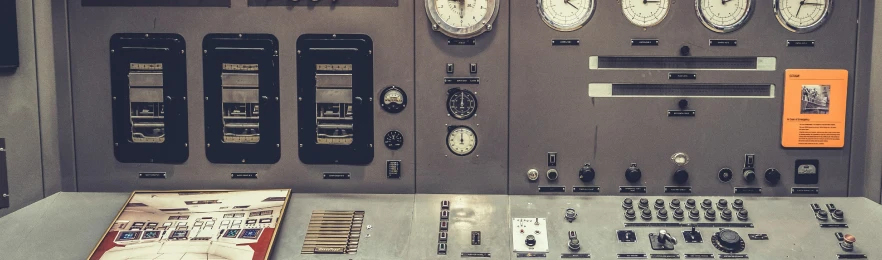
Arguably humanity’s greatest technological achievement, The Internet, is a direct product of the paranoia of the Cold War. In the 1960s the precursor to the Defense Advanced Research Projects Agency (DARPA) was asked to work out how the US military could maintain comms after a nuclear strike vaporized the central telephone exchanges.
They proposed a radical solution of distributed networks. Unlike the centralized telephone system (with everything routed through a single-point-of-failure hub) a distributed network would send multiple copies of the same message broken up into multiple packets, each of which would independently navigate a mesh of nodes to reach their destination and be reassembled.
If one or more nodes were vaporized in an atomic fire, the packets would simply flow around the damage. This concept of packet switching became the foundation of ARPANET, which went live in 1969 with a modest four nodes, and grew up to be the modern internet.
This design is the direct ancestor of all agnostic connectivity and failover models. The move from circuit-switching telephony to packet-switching internet was the first phase of true telco resilience. The current move to multi-network eSIMs is the second phase, extending that ‘flow around the damage’ capability to the physical radio access layer itself.
Thanks to the better part of a century of peace in most of the West, natural disasters served as the primary means of proving and testing resilient telco.
The 1985 Mexico City earthquake prompted NASA's tasking of the ATS-3 satellite to reestablish voice links, a capability that evolved into the Space Bridge telemedicine project following the 1988 Armenian earthquake, connecting Soviet hospitals with American medical centers for remote consultations. The project was so successful it was reactivated to treat burn victims from a gas explosion in Ufa and later to assist casualties during the 1993 coup in Moscow.
By the 2010 Haiti earthquake, the focus had shifted to dealing with Hastily Formed Networks (HFNs), where the chaotic mix of military comms gear, civilian Wi-Fi mesh and volunteer equipment highlighted the critical need for the standardized, interoperable protocols that are now the bedrock of modern eSIM and 5G/LTE resilience. While the stakes are lower, modern office managers would recognize many of the problems posed by HFNs within the context of today’s BYOD policies.
Research published by MDPI analyzing worldwide data from the ‘80s to the mid 2010s showed that every time cellular availability increases by even the smallest statistically measurable unit, disaster fatalities are reduced by nearly 50%.
The takeaway for anyone forming adversity strategies, for a nation or a business, is that the best possible way of mitigating the effect of any form of disaster or attack is to make sure everyone can still talk to each other.
The nature of those threats is, of course, evolving too.
The Telco Threat Matrix
Fragile Hardware
Despite the fate of the Titanic, through much of the 20th century the telco industry operated under a mistaken assumption of stability. An emergent new class of business, the Network Operator, constructed vast centralized empires defined by physical assets of steel towers, copper wires, and massive line exchanges.
This architecture was designed for cost efficiency and economy of scale, optimized for high bandwidth and low latency under ideal conditions. However, the re-emergence of high-intensity conflict in Europe and the growing frequency of natural disasters has increasingly publicized the inherent fragility of the model.
The central weakness lies in the physical concentration of critical assets. Facilities where otherwise distinct networks and carriers interconnected became the grand junctions of the dawning digital age.
Their advantage, in addition to economy of scale, was allowing connections between traffic on competitor and parallel networks. Their disadvantage was that such exchanges were also singular points of widespread failure for everyone involved.
Whether an event comes in the form of kinetic attacks, targeted sabotage, power outages, burned wiring, cooling system fails, or a single mouse that cut off New Zealand, the disruption will not stay contained. It propagates, severing connections across entire regions and disabling access to cloud services, emergency lines, and financial networks.
The invasion of Ukraine demonstrated what Yuriy Matsyk, Director at the Ukrainian Ministry of Digital Transformation, described to reporters as a doctrine of ‘infrastructure severance’, where strikes were prioritized against TV towers and fiber nodes to isolate the population and blind defenders. In occupied territory, physical capture of network nodes allowed the invaders to reroute traffic through their own surveillance gear, effectively subverting local infrastructure against its users in what IT admins would recognize as a massive version of a Man in the Middle attack.
Unsecured Surfaces
The most effective cybercrime and hybrid warfare attacks are those that blend physical destruction with digital sabotage. The brittleness of inflexible telco architecture is compounded by threats that target the network’s own logic.
In 2024 a cyberattack on Lviv using malware known as FrostyGoop shut down the heating and hot water for over 600 apartment buildings during brutally sub-zero temperatures. The attack was tailored to break morale and tie up military assets saving civilians. Security analysis reported that the attacker gained traction not by technological superiority but simply through unsecured portals and poor credential management.
This event highlighted the fact that ‘security by obscurity’ was no longer a viable defense, and that every single access point across a network is a threat surface. Similar lessons had been presented by cybercriminals gaining access to casino systems via an unsecured networked fishtank, but never before had so many lives been at stake as in Lviv.
The reliance of legacy protocols on assuming bad actors won’t look too hard or long for a way in was never going to stand up to modern cyberwar – leaving networks open to infiltration and DDoS attacks all remotely executed from the cozy warmth of home base.
Resilience and Agnostic Connectivity
The solution to systemic fragility isn’t just building thicker walls around data centers, although it certainly doesn’t hurt, but to fundamentally reframe the relationship between device and network.
The telco industry has shifted toward infrastructure agnostic connectivity, a design philosophy where the user is not tethered to the continuity of a single provider.
Leading this shift is the deployment of eSIM and International Mobile Subscriber Identity (Multi-IMSI) technologies. Companies like 1GLOBAL have pioneered a global core network architecture that allows a single eSIM to host multiple network profiles.
In a crisis scenario, this capability is revolutionary. It enables autonomous network switching, where if the primary carrier in a region suffers an outage, performance falloff, or core network cyberattack, the eSIM-powered device detects the loss of connectivity and automatically swaps to any number of backup profiles, connecting to whatever trusted infrastructure remains operational.
By decoupling digital identity from the physical hardware of any one MNO, agnostic connectivity creates a network of networks. It transforms connectivity from a fragile chain, which breaks at its weakest link, into a resilient mesh that survives as long as any path remains open.
The most significant advantages to this connectivity model include:
Infrastructure Dependency
The traditional MNO model is tied to the specific physical hardware of one carrier, while agnostic models such as 1GLOBAL’s provide access to an aggregate of over 600 global networks.Failure Response
A tower or core outage in the traditional model results in total service blackout, while an agnostic model allows the device to initiate an instant failover to backup carriers.Provisioning Logistics
Traditional models require physical distribution of replacement SIMs, which is costly in peacetime and hazardous during threat situations, compared with the near-instant and safe over-the-air Remote SIM Provisioning (RSP).
Hybrid War in Latvia: A Case Study of Financial Resilience
While natural disasters provide good studies in terms of scale, to see an example of network resilience in action it’s more useful to consider situations where adversaries are actively looking to break things.
In the theater of modern hybrid warfare, the banking system is a frontline. Aggressors seek to destabilize economies by severing access to financial services, creating panic that can topple governments just as effectively as tanks, and at a fraction of the cost.
Resilience in this sector requires a particularly sophisticated hybrid approach that embraces the efficiency of digital financial services while maintaining the robustness of cash.
Latvia, out on the nervous eastern edge of NATO, is a neat study in financial preparedness. Despite what Western Europeans might assume, Latvia has already embraced a highly digitized economy, with cash accounting for than less than a quarter of all transactions as of Q4 2025.
While this growing digitization was driving economic efficiency, the central Latvijas Banka recognized it as a potential liability during a cyber-attack or even simply a power grid failure.
As chief of a bank that already had good reason to stay vigilant, Governor Mārtiņš Kazāks made his financial institution’s position explicitly clear, saying Europe is "already at war". Consequently, the Latvian financial sector has hardened itself for scenarios where the financial sector’s telco backbone ceases to exist.
Legislative and Physical Hardening
Latvia’s approach moves beyond voluntary civil advice in the ‘Keep Calm and Carry On’ style to solid proactive legislative mandate. Amendments to Latvian national security and mobilization laws created a special strategic asset category for critical financial services. This legislation exempts essential banking personnel from military mobilization, ensuring they remain at their posts to always keep financial channels open and prioritize critical traffic. Mr. Kazāks and his colleagues clearly took on board the hard lessons of the Titanic telegraph operator.
Meanwhile, the central banks designated a network of ‘critical’ ATMs. Strategically chosen, they’re legally required to be hardened, heavily stocked, equipped with independent power generators and multiply redundant cellular and landline links. In a crisis, ‘replenishment teams’ will prioritize these machines, ensuring the population has access to physical currency even if the rest of the lights go off.
The strength of this strategy comes from acknowledging that in the initial panic of a crisis, cash provides immediate psychological security and trade capability. This is the same insight to the human condition that puts ashtrays in airplane toilets – it’s smarter to have and not need than need and not have.

Offline Payments
Among the Latvian financial sector’s most forward-thinking responses is deployment of fully offline card payment backups. 1GLOBAL’s own eSIM solutions are used in daily retail environments to ensures business continuity by functioning as an automatic failover mechanism that instantly switches a store’s’POS systems to a backup cellular connection whenever a primary internet outage is detected.
By leveraging a multi-network infrastructure with access to over 600 carriers globally, this guarantees that transactions continue to process seamlessly without manual intervention, effectively preventing revenue loss and customer dissatisfaction during downtime.
However, a total warfare-level communications blackout could still render even cellular backup terminals useless, if the central bank itself was neutralized. Through collaboration between the central and commercial banks, and essential retailers such as pharmacies, fuel stations, and supermarkets, an emergency protocol for offline transaction processing has been installed throughout Latvia.
In this system, a POS terminal will store transactions locally on the device without immediate authorization from the central clearinghouse, to be deferred and settled once connectivity is restored.
Since this involves a certain amount of risk and good faith on behalf of the stores, there are some limits including a €50 cap and exclusion of luxury goods.
This capability ensures that the internal economy of food and fuel distribution can continue to function digitally, before even falling back on cash.
Roam like at Home on the Eastern Front
While not as dramatic as rolling tanks through a roadblock, at the start of 2026 the European Union quietly but effectively redrew its digital borders by including Ukraine and Moldova into the Roam Like at Home (RLAH) zone. This strategic integration has wider implications than streamlining telco policy and saving an unwary business team from coming home to bill shock.
The RLAH zone basically eliminates roaming surcharges for travelers between the included member states. This means a displaced Ukrainian or a Moldovan truck driver can both just as easily use their phones without incurring prohibitive costs.
To be fair, since the start of the Ukrainian war, many MNOs voluntarily waived fees for the refugees fleeing westward. However, relying on humanitarian measures is unstable in the longer term and not good policy. For areas like Moldova, a nation heavily targeted by external hybrid influence, this tangible benefit of European integration serves as an effective counter-narrative to Euro-skepticism. It demonstrates the concrete value of Western alignment to both citizens and businesses every time they make a call or cross a border.
Typically of the EU, this mission quietly came armed to the teeth with rules and protocols. From an infrastructure perspective, the alignment compels the Maastricht Treaty Title 1 Article A mission of ‘ever closer union’ through ever deeper technical integration. Ukrainian and Moldovan MNOs must now meet all the EU QoS standards.
This encourages the build-out of high-capacity interconnects between EU neighbors, reinforcing both commercial integration and physical redundancy. If Ukraine’s internet is attacked, traffic can far more easily be shunted through Poland, Slovakia, or Romania via these enhanced commercial pathways, ever more effectively actualizing what that little four-node ARPANET was destined to become.
The expansion to the East is part of a broader strategy that’s now fast-tracking the Western Balkans. The EU has laid out a significantly accelerated roadmap for Albania, Montenegro and others to join the Zone with a target of fully eliminating fees as early as 2028. The aim is to create a contiguous digital bloc stretching from the Atlantic to the Dnieper, solidifying the region's telco infrastructure against external influence and unifying the regulatory landscape under Brussels' bureaucratically benign regime.
The uncharacteristic and even unpopular speed with which the EU is expanding its digital sphere of influence shows that Brussels knows how important regional control of large fleets of cellular devices will be both for disaster response and ongoing hybrid warfare in the escalating Internet Battlefield of Things.
Democratizing Connectivity During Crisis
Throughout all the above crisis examples, whether of armed conflict or natural disaster, the reoccurring theme is the importance of creating resilience by moving connectivity away from fragile hardware centralization and into a dynamic, distributed on-demand services.
Data architecture pioneers like 1GLOBAL are at the forefront of this shift by creating platforms that empower organizations, from neobanks to logistics firms and aid agencies, to become their own connectivity providers.
While unlikely to be recognized alongside the invention of radar in defining the modern battlefield and rescue response, the adoption of the GSMA’s next-gen SGP.32 standard is a technical milestone with significant strategic implications.
Among its many profound effects across multiple industries and verticals, this eSIM tech standard introduced the IoT Remote Manager (eIM), a specialized server function that massively simplifies and opens up the connectivity management of devices.
In a disaster or conflict scenario, devices will spend a lot of their useful life going to very physically inhospitable places. A sensor embedded in a supply pallet, on a moving train, or inside something designed to explode cannot be manually reset every time a change in network conditions occurs.
SGP.32 has allowed for the easy, remote orchestration of these devices at any scale. A logistics commander can push new network profiles to thousands of trackers simultaneously as they cross a border, equip them with backups profiles for when local infrastructure begins to fail, or decommission their connections entirely.
This resilience via democratization is as much about abstracting complexity as it is about adding technology. By using the Embedded Telco capabilities made possible by SGP.32, non-telco organizations can now easily integrate connectivity into their operational tools via API.
A simple use-case would be the providers of emergency medical ventilators embedding connectivity from a partner like 1GLOBAL during manufacture. When those ventilators are deployed to a field hospital in a disaster zone, they’ll automatically connect to the right local network, ready immediately from power-up to transmit telemetry and biometric data back to base. The aid agency doesn’t need to negotiate a contract with a local telco or worry about fiddling with configs during a crisis – the device simply connects with all the convenience of a new iPhone out of the box.
This happens because technology partners like 1GLOBAL will shoulder all the deep technical and regulatory complexity (which is obligatory even for emergency medical gear) in the background. This allows an organization to focus on maintaining civil society and saving lives, rather than navigating telco bureaucracy while everything else is on fire.

Connectivity as a Lifeline
Resilience in Civil Defense
The ability to maintain financial and operational continuity is not merely an economic convenience, but an active defensive safeguard against the destabilizing effects of hybrid warfare and natural disaster.
Resilient technologies such as 1GLOBAL’s enterprise connectivity solutions address this by replacing fragile, single-thread connections with a federation of global networks. This mesh architecture ensures that if a primary carrier is sabotaged on purpose or flooded by fate, the system autonomously reroutes traffic, acting as a self-healing network to prevent total blackout.
Furthermore, the shift from physical SIM to cryptographically secured eSIM eliminates the physical risks of theft and unauthorized swapping, ensuring that the right hardware stays in the right hands.
Resilience in Situational Awareness
As MDPI’s research showed, the importance of accurate, real-time information is hard to overstate in terms of survival outcomes. Connectivity providers like 1GLOBAL use IoT tech that leverages multi-IMSI to provide smart, automated network switching that ensures devices can always identify and connect to the optimal available network.
This robust agility allows aid agencies to bypass damaged logistics routes (both informationally and physically) and deliver material where it’s needed most, transforming every connected device into a contributing node of resilience, the opposite of a Hastily Formed Network.
Resilience in the Everyday
Ultimately, telco during war and crisis will serve to protect the everyday functions of society. Whether it’s ensuring a pharmacy's POS terminal remains online or allowing a displaced person to access their bank account, prepared organizations like Latvijas Banka know that these technologies are a safety net of normalcy.
1GLOBAL’s IoT POS solutions, for example, provide built-in failover support that safeguards against network downtime, which at the best of times can cost enterprises hundreds of thousands per hour, ensuring that the internal economy continues to function even when landlines become unreliable.
The narrative of telco development has been one of rapid adaptation under fire. Sometimes literally. The rigid, monopolistic structures of the 20th century such as state-owned national carriers, physical SIM cards, and centralized banking proved too brittle for the dynamic threats of the 21st century.
Resilience is built through the agility of agnostic networks that flow around damaged nodes, by offline payment protocols that sustain commerce in the dark, and strategic roaming policies that erase borders to strengthen societies against bad actors.
Telco now has a pivotal role;not by resisting nationwide shocks, but by absorbing and routing around them, using all the right technology for all the right reasons.
If you would like to discuss how to embed resilient connectivity solutions into your business, contact 1GLOBAL today.
About 1GLOBAL
1GLOBAL is a distinguished international provider of specialty telecommunications services catering to Global Enterprises, Financial Institutions, IoT, Mobile Operators and Tech & Travel companies. 1GLOBAL is an eSIM pioneer, a fully accredited and GSMA-certified telco, an MVNE, and a full MVNO in ten countries, fully regulated in 42 countries, and covers 190+ countries.
1GLOBAL delivers comprehensive communication solutions that encompass Voice, Data & SMS - all supported by a unique global core network. Its constantly expanding portfolio of advanced products and services includes MVNE services, white label eSIMs, Connectivity Solutions, Compliance and Recording, Consumer & M2M SIM Provisioning and an Entitlement Server.

 is an extensively experienced creative who has worked as a lead copywriter for numerous global clients and international household names, working on through-the-line projects, creative copy, ideation, content, marketing and brand activation for highly diverse industries in the business world. Duncan's career has included almost every sector imaginable, particularly across the tech space, making his news and industry analysis focused on eSIM, IoT and business connectivity both well-informed and engaging.
 )
)
)

