A User Guide to the Technical Terms and Phrases that define the Telco Industry
 General
)
On this page
Share:
- Copy this linkLink copied to clipboard
Share:
- Copy this linkLink copied to clipboard
It’s hard to understate how quickly and profoundly the global telecommunications industry is changing. Digital transformation no longer means faster downloads and fancy landing pages, but a total reframing of how connectivity makes its data architecture part of essential daily workflows.
Summarize this article with AI
Principles and tech like virtualization, cloud-native principles, and intelligent automation are coming together in new and often-unexpected ways.
New, agile models for digital business are emerging almost daily, rendering traditional network structure obsolete. In this dynamic environment, a detailed understanding of the landscape is increasingly out of the reach of any one individual – but a working grasp of the latest terminology and concepts will at least equip professionals to follow the trends and recognize the risks and rewards as they emerge.
If not fluency, then at least familiarity with the terminology of this new era is essential for negotiating effectively with a diversifying ecosystem of vendors and fostering a digital ecosystem that’s a competitive advantage rather than a cost sink.
This article is your phrase book for the latest key terms and concepts defining business connectivity.
Telco Foundations
eSIM (Embedded SIM)
An eSIM is a programmable, non-removable SIM card that is built directly into a device like a smartphone or IoT sensor. This tech allows for the remote activation and management of cellular plans, making it easier to switch carriers and connect devices globally.
You’re probably using an eSIM without even knowing it. Most new smartphones, including all iPhones from the 13 series onwards, come with built-in eSIMs that store your number (with no physical SIM card needed).
Multi-IMSI
This refers to a single SIM or eSIM that can hold multiple International Mobile Subscriber Identities (IMSIs). This technology allows a device to seamlessly switch between different mobile network operator profiles, either to find the best local coverage or to take advantage of more favorable roaming rates, all without physically changing the SIM card.
With the 1GLOBAL network, when a subscriber arrives in a new country, the SIM and handset work with the network to apply the correct IMSI for the location from a pre-configured list. This unique approach allows 1GLOBAL to offer global connectivity plans with predictable costs all whilst ensuring the quality and reduces the cost of making calls, using data and sending SMS.
5G
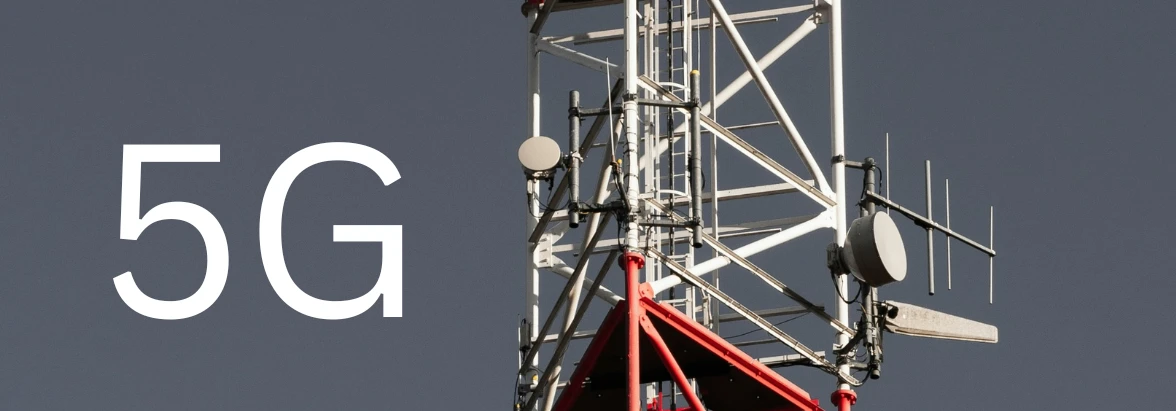
Fifth Generation (5G) is the latest standard for mobile cellular networks, delivering significantly higher speeds, ultra-low latency, and the capacity to connect a massive number of devices. This tech is not simply ‘more G’, and for businesses it’s powering transformative applications in automation, IoT, and real-time data processing that were not possible even one generation ago.
Enhanced Mobile Broadband (eMBB)
This is a key-use case of 5G that focuses on dramatically increasing data bandwidth and capacity. For businesses, eMBB enables high-definition video conferencing, large file transfers, and new commercial applications like immersive AR/VR.
Massive Machine-Type Communications (mMTC)
As part of the 5G technology bundle, mMTC provides scalable connectivity to a huge density of low-power, low-consumption devices – up to a million inside a single square kilometer. It's the enabling technology for the next generation of large-scale IoT deployments like smart cities, connected agriculture, and logistics tracking.
Ultra-Reliable Low-Latency Communications (URLLC)
URLLC is part of the 5G tech stack that provides extremely dependable, secure, and virtually instantaneous network response. It's essential for use cases where delay isn’t an option, such as autonomous vehicles, remote telematics, and industrial robotics.
Fixed Wireless Access (FWA)
FWA provides what used to be considered broadband levels of internet service over the air instead of with physical cables like fiber or DSL. It's a key standard for quickly connecting business locations, especially in areas where laying physical lines is difficult or costly.
Architecture
Software-Defined Wide Area Network (SD-WAN)
SD-WAN is a virtualized network technology that routes traffic across multiple connection types (e.g., 5G, broadband, MPLS) to optimize application performance. It simplifies network management and reduces costs for businesses with multiple distributed locations.
Slicing
Another new feature of 5G, network slicing allows a single physical network to be partitioned into multiple virtual networks. Each slice can be customized with specific resources and quality-of-service parameters (like speed or latency) to meet the unique needs of a particular business application or service. Each virtual slice only exists as long as it’s needed for, making it ideal for events, exhibitions and festivals.
Open Radio Access Network (RAN)
The plug-and-play USB slot of digital architecture, Open RAN is a new approach to building mobile networks that uses standardized interfaces and connectivity, allowing operators to easily mix and match hardware and software from different vendors. This strategy lowers setup costs, increases competition, and reduces supplier lock-in.
RAN Intelligent Controller (RIC)
The brain of an Open RAN system, the RIC acts like a software platform that allows operators to control and optimize the radio access network, enabling real-time oversight, network automation and performance enhancement.
Roaming
Roaming is a service that allows a mobile device to connect to a partner network when it's outside its home carrier's coverage area. For global businesses, roaming agreements are crucial for ensuring employees and IoT devices stay connected seamlessly across different countries.
Roaming charges begin the moment your mobile phone connects to a network in a foreign country. To avoid steep roaming charges, MVNOs like 1GLOBAL can automatically switch your eSIM-enabled device to a local network via their carrier access agreements. This allows you to pay local rates while roaming, and connect to premium local networks.
Edge Computing
Edge computing is a model where data processing and storage is moved from a centralized cloud to closer to where the data is generated and actionable response needed, such as on a factory floor or retail location. This reduces latency and bandwidth usage, enabling faster, more reliable performance for real-time applications like IoT analytics and AI.

Automation
Internet of Things (IoT)
The Internet of Things is the product of combined manufacturing and connectivity technologies that have transformed devices from inert assets to smart, data-generating nodes on a network. By embedding sensors and connectivity, businesses now have real-time digital insight into their own operations on a global scale. This constant stream of data enables automation, predictive maintenance, and the creation of entirely new data-driven services that optimize efficiency and customer value. IoT is the keystone of the Fourth Industrial Age.
If you have ever used a car-sharing app, smart refrigerator or smart lighting, worn a smartwatch or even used a self-scanner at the supermarket, then you have interacted with IoT-connected devices in the real world.
The Fourth Industrial Age
Also called Industry 4.0, this describes the current era of technological transformation, defined by the fusion of the digital, physical, and service sectors. It is built upon the convergence of technologies like AI, IoT, robotics, and advanced connectivity to create cyber-physical systems like smart factories and automated supply chains. This paradigm uses real-time data and intelligent automation to revolutionize how businesses operate, innovate, and create value.
Industrial IoT (IIoT)
This refers to the specific application of IoT tech within industrial sectors like manufacturing, energy, and logistics. It involves connecting machinery and control systems to optimize production, enable predictive maintenance, and enhance worker safety.
Machine-to-Machine communication (M2M)
The precursor to the broader IoT, M2M comms involve devices transmitting data over a network to an application that automates a singular, specific function. It focuses on the point-to-point telemetry and telematics that enable processes like a POS talking to the bank or a vehicle reporting its location to a fleet manager. Today, M2M is a foundational connectivity layer upon which a more complex, data-rich IoT ecosystems is built.
Vehicle-to-Everything (V2X)
V2X is a system design that allows vehicles to share real-time information with other vehicles (V2V), infrastructure like traffic lights (V2I), and pedestrians (V2P), improving road safety and enabling advanced driver-assistance systems and autonomous driving.
The Cloud
Software as a Service (SaaS)
SaaS is a cloud-based model where software is hosted by a provider and made available to subscribers over the internet. This eliminates the need for businesses to manage complex software and hardware, simplifying IT and massively reducing set-up times and overheads.
Platform as a Service (PaaS)
PaaS is a cloud model that provides a platform allowing customers to develop, run, and manage applications without the complexity of building and maintaining the underlying infrastructure. It provides the tools and environment for developers, while the cloud provider handles the servers, storage, and networking.
Network as a Service (NaaS)
NaaS is a cloud model that allows businesses to maintain enterprise-grade network functions and transport on-demand via a subscription. While a business obviously needs the basic infrastructure to connect to the service provider, the model offers greater flexibility to scale resources up or down without owning or managing the physical hardware.
Unified Communications as a Service (UCaaS)
UCaaS is a cloud service that bundles various communication and collaboration tools (voice, video conferencing, messaging) into a single, integrated platform. It offers businesses a scalable and cost-effective way to streamline communications for a distributed workforce.
CPaaS (Communications Platform as a Service)
This is a category of cloud platform that allows developers to integrate communication features like SMS, voice, and video calls directly into their own applications using APIs. It provides the building blocks for creating customized communication experiences rather than a pre-built application.
SASE (Secure Access Service Edge)
SASE is a security framework that combines networking and security functions into a single, cloud-delivered service. It provides secure and optimized access for users and devices to applications and data, regardless of their location.
AI
Artificial Intelligence (AI)
AI involves creating intelligent systems that can perform tasks that typically require human intelligence, such as problem-solving, decision-making, and understanding language. In business, AI is used to automate processes, analyze complex data from connected systems, and provide predictive insights. There’s hardly an industry in the world not currently undergoing transformation due to AI use, and few more than business telco.
Machine Learning (ML)
ML is a subset of AI where algorithms are trained on data to learn patterns and make predictions or decisions without being explicitly programmed. Businesses use ML to personalize customer experiences, detect anomalies in network traffic, and optimize supply chains.
Network Operators
Mobile Virtual Network Operator (MVNO)
An MVNO is a wireless service provider that doesn't own the network infrastructure it uses. It purchases network access in bulk from a traditional mobile network operator (MNO) and resells it to customers under its own brand.
1GLOBAL operates as a fully-regulated MVNO in 10 countries – UK, US, Germany, France, Spain, Netherlands, Australia, Poland, Hong Kong and Brazil. We are also a regulated telecommunications operator in a further 31 countries.
Mobile Virtual Network Enabler (MVNE)
An MVNE provides the back-end infrastructure and services (like billing and operations support) to help an MVNO launch its services quickly. They act as a facilitator between the MVNO and the host mobile network operator.
1GLOBAL operates as an MVNE by providing the platform through which other businesses – often non-telcos – can launch their own mobile services to offer eSIM-powered data plans to their own customers.
Remote SIM Provisioning (RSP)
Remote SIM Provisioning is the technology that enables the remote management of eSIMs. It allows network profiles to be securely downloaded and switched over the air, eliminating the need to physically access a device to change its SIM card or carrier plan.
With RSP, businesses can manage thousands of eSIM profiles remotely, and intelligently, making it an essential technology supporting the growth of eSIMs in enterprise. 1GLOBAL’s RSP offering enables customers to create profiles, manage inventory, conduct real-time monitoring and execute client onboarding in just a few simple clicks.
Over-the-air (OTA)
OTA refers to the wireless method of distributing software updates, configuration settings, or security patches to devices. This is essential for managing and maintaining large fleets of IoT devices or connected vehicles without requiring physical intervention.
SmartEnterprise
SmartEnterprise is 1 GLOBAL’s prepaid, eSIM-enabled shared data plan for international organizations, providing high-speed connectivity across 160+ countries. Its primary advantages include significant cost savings by eliminating roaming charges and bill shock. It offers simplified, centralized remote management through a single portal, enhanced security with a Zero Trust model, and reduced downtime via automatic carrier failover. This scalable solution improves compliance, flexibility, and productivity for a global workforce on a single contract.
Telco Services
Service Level Agreements (SLAs)
An SLA is a contract between a service provider and a customer that defines the expected level of service, including specific metrics for uptime, performance, and support. In global connectivity, SLAs are critical for ensuring the reliability and quality required for business-critical applications.
Embedded Telco
This refers to the integration of telecommunication services (like connectivity, voice, or messaging) directly into a non-telecom company's product or platform via APIs. It allows businesses to offer whitel-labeled, seamless, branded communication and connectivity features as part of their core service.
Companies such as digital bank N26 and Kuwaiti airline Jazeera Airways offer their customers embedded telco solutions via partnership with 1GLOBAL. N26 users can download and install the N26 SIM on their app and access competitive 5G data plans, while Jazeera Airlines passengers can purchase and access their travel eSIM via a branded QR code and via a button directly integrated into the Jazeera Airways app.

Compliance & Security
Message+
1GLOBAL's Message+ is a business messaging platform that integrates channels like WhatsApp, SMS, and RCS into a single API. This helps businesses enhance customer engagement, streamline communications, improve service efficiency, and maintain engagement via direct messaging. Integrated into Microsoft Teams, the platform simplifies international comms by providing a single API and interface for worldwide delivery and compliance.
Private Networks
A private network is a dedicated mobile network built for the exclusive use of a single enterprise, such as a factory, port, or large campus. It provides enhanced security, reliability, and granular control over connectivity, keeping all data on-premises and isolated from public networks.
Zero Trust
Zero Trust is the new best-practice security model built on the principle of ‘never trust, always verify’. It grants access to applications and data on a per-session basis only after authenticating the user and device. It replaces traditional perimeter-based security, and is better suited for securing a distributed, mobile workforce.
As pioneers of professional connectivity, trusted by the world’s largest banks, and experts in mobile connectivity and eSIMs, 1GLOBAL has a record of introducing Zero Trust architecture into the connectivity departments of multinational businesses, aiding their digital transformation.
Data Sovereignty
This is the legal concept that data is subject to the laws and regulations of the country in which it is physically located. For global businesses, understanding data sovereignty is critical for compliance, as it dictates where they can store and process customer or operational data.
Software & Infrastructure
Application Programming Interface (API)
An API is a set of rules and protocols that allows different software applications to communicate and share data with each other. In global connectivity, APIs are the fundamental building blocks that enable services like CPaaS, Embedded Telco, and the integration of connectivity management into business software.
Backhaul
Backhaul refers to the part of the network that links the edge access network (like cell towers) to the core network backbone. The capacity and performance of the backhaul connection, often using high-capacity fiber optics, is a critical factor in delivering the full speed and low-latency potential of technologies like 5G.
Local Breakout
This is a network traffic routing strategy where data from a roaming device is directed immediately to the public internet from the visited country's network, rather than being routed all the way back to the home network first. This significantly reduces latency and improves data speed, providing a ‘like-local’ quality experience for applications even when the user or device is thousands of miles from its home base.
Entitlement Servers
An Entitlement Server (ES) is a central network component that automatically manages and enforces service access rights and configurations for subscriber devices, orchestrating complex tasks like VoLTE, VoWiFi, and eSIM activation. The 1GLOBAL ES solution is a key business differentiator, being highly scalable and secure, and compliant with all major industry standards.
Connectivity Management
IoT Platform
An IoT Platform is a middleware software that serves as the central "command center" for managing IoT deployments. It handles device connectivity and management, data collection and storage, and provides analytics and application development tools for turning raw sensor data into business insights.
Digital Twin
A Digital Twin is a virtual, real-time representation of a physical object, system, or process, continuously updated with data from its physical counterpart via IoT sensors. Businesses use Digital Twins to simulate scenarios, monitor performance, predict failures, and optimize operations without impacting the real-world asset.
Connectivity Management Platform (CMP)
This is a specialized software portal that allows a business to manage its entire fleet of IoT and M2M SIM cards and eSIMs. A CMP provides centralized control over activations, data plan assignments, real-time monitoring of usage, and diagnostics, which is essential for managing large-scale, global deployments efficiently.
Bootstrap Profile
An essential feature of modern eSIM technology, the Bootstrap Profile is a very small, pre-installed network profile on an eSIM-enabled device. Its sole purpose is to provide ‘out-of-the-box’ initial connectivity to any available network, allowing the device to connect to a full CMP to download its primary, operational network profile without any manual setup.
If you have ever used an iPad in a foreign country, you may have noticed that you are able to provision a local eSIM plan without needing WiFi – this over-the-air provisioning of local eSIMs happens thanks to bootstrap connectivity. It means that you do not have to connect to an expensive local network at high roaming costs in order to access your eSIM profile.
This is just a handpicked selection of some of the most common technical terms widely used within the telco space. If you would like to learn more about any of the technologies featured above, and how they can help your business, contact 1GLOBAL for an expert consultation.
About 1GLOBAL
1GLOBAL is a distinguished international provider of specialty telecommunications services catering to Global Enterprises, Financial Institutions, IoT, Mobile Operators and Tech & Travel companies. 1GLOBAL is an eSIM pioneer, a fully accredited and GSMA-certified telco, an MVNE, and a full MVNO in ten countries, fully regulated in 42 countries, and covers 190+ countries.
1GLOBAL delivers comprehensive communication solutions that encompass Voice, Data & SMS - all supported by a unique global core network. Its constantly expanding portfolio of advanced products and services includes MVNE services, white label eSIMs, Connectivity Solutions, Compliance and Recording, Consumer & M2M SIM Provisioning and an Entitlement Server.

 is the Growth Marketing Head at 1GLOBAL, where he leverages his expertise in digital growth and business development to manage and expand the company's online presence and its global telecom and eSIM solutions. He has previous experience growing companies in the e-commerce and luxury watch industries. Passionate about creating value for stakeholders, Raghav focuses on enhancing operational efficiency through digitization and automation while exploring new opportunities and markets.
)
)
)

