Challenges eSIMs Still Face (And How the Industry Can Tackle Them)
 Mobile Operators
)
On this page
Share:
- Copy this linkLink copied to clipboard
Share:
- Copy this linkLink copied to clipboard
Last week saw the release of four new iPhone models: the iPhone 17, iPhone 17 Pro, iPhone 17 Pro Max, and the iPhone Air.
Summarize this article with AI
While each one boasts different cosmetic and performance upgrades, they all share one notable new feature: eSIM connectivity. North American models of the iPhone 17, the 17 Pro, and Pro Max are eSIM-only, with no physical SIM card slot. The iPhone Air takes this a step further – the model is only available with eSIM, earning it the nickname the “SIM-card killer”.
Apple last released an eSIM-only iPhone in the US in 2022. In the intervening years, the acceptance and public adoption of eSIMs has surged (driven in no small part by the iPhone 14 itself), paving the way for the viable release of an eSIM-only iPhone for the global market.
The influence of the new iPhone launch is such that it’s already affecting legislation. The iPhone Air has prompted the Chinese government to relax its long-standing prohibition of eSIM-enabled smartphones, in a notable case of consumer demand influencing national policy.
The new iPhone generation confirms a long-held belief in the telecoms world – not only are eSIMs here to stay, they’re set to replace SIM cards as the standard SIM format for consumer mobile phones. The speed of this transition is still unclear, with eSIM adoption rates dependent on multiple demographics, from nationality to age group. As the technology continues to gain pace, we explore the advantages eSIMs offer to consumers and why the SIM card isn’t obsolete just yet.
The inexorable march of eSIM?
For many analysts, the demise of SIM cards is a foregone conclusion, with the cards headed the same way as floppy disks or dial-up modems. In the last decade, eSIMs have transitioned from a niche industrial tool to a worldwide phenomenon, already accounting for half of all global smartphone connections – by some estimates, this could rise to 75% by 2030.
This transition won't happen overnight. Several economic, social, and technical barriers towards total eSIM adoption remain.
Why eSIMs are replacing SIM cards among consumers
1. The physical barrier
When choosing a SIM format for a new smartphone, eSIMs have an immediate advantage over their physical counterparts: the installation process. An eSIM can be downloaded in seconds, and handsets purchased with pre-installed eSIM plans. SIM cards must first be manually inserted, usually with a tiny and easily-lost SIM tool (or by hunting around for a paperclip and hoping it fits). The right size of SIM card must also be determined for the handset – if the customer orders the wrong size, they’ll need to physically go to a store or order a replacement online. For users with accessibility needs, this itself is enough reason to switch to a digital alternative.
An eSIM is downloaded to a microchip embedded within the device, requiring no physical effort to install.
As eSIMs become more widespread, device manufacturers are gearing their new hardware and operating systems towards the technology. Apple’s iOS 26 software, launched in September 2025, is replete with eSIM-friendly features that make the installation and usage of eSIMs even more intuitive.
The new eSIM auto-switching feature in iOS 26 activates a user’s travel eSIM as soon as they leave the country, and reactivates their regular domestic eSIM when they return.
Together with an eSIM service from 1GLOBAL, iOS 26 also enables new services like eSIM Quick Transfer, which wirelessly passes all eSIM data from an old device to a new one without the owner having to contact their carrier or complete a lengthy installation process.
2. Roaming fees
Once installed, the lasting benefits of eSIM can be fully appreciated. A key advantage eSIMs offer over physical SIM cards is that eSIM-enabled mobile phones can store multiple eSIM profiles from different carriers. While some phones can store more than one SIM card, physical constraints mean this is rarely more than two. The new iPhone 17 has space for at least eight separate eSIM profiles. For customers, this means the freedom to switch between different providers for different needs.
When traveling to a new country, accessing mobile data on a regular domestic carrier can incur hefty roaming costs, which can often mount up unnoticed.
An eSIM allows the user to sidestep these roaming fees by switching to a temporary travel eSIM abroad. Previously, this would require users to order a local SIM card online, replace their SIM when travelling, and lose access to contacts, two-factor authentication services, and calls.
With a travel eSIM, users can switch to a local profile while retaining access to all information stored on their regular domestic SIM. The increased storage capacity allows customers to store travel eSIMs for multiple destinations and switch between them as required. With SIM cards, this would require a process of continually alternating between multiple separate cards. These features have led to a rapidly growing travel eSIM marketplace. By 2030, 41% of international travelers from North America are expected to use an eSIM during their trip.
3. Security
A further concern with owning multiple SIM cards, particularly while travelling, is the inherent risk of theft, loss, or damage. An embedded SIM chip cannot be physically removed, negating the possibility of theft. Removing the physical form factor provides increased peace of mind, though eSIMs, like SIM cards, are still at risk of SIM swap scams and other cyberattacks.
Why eSIMs are replacing SIM cards for businesses
The same functionality that makes eSIMs popular for international travel can also be used for maintaining work and personal numbers on the same handset.
The eSIM has revolutionized the world of business connectivity, allowing employers to instantly distribute secure, reliable mobile data plans to employees around the world.
The instant deployment, management, and recall of these plans is known as remote SIM provisioning. Security issues around SIM cards are of even greater concern to business travellers – keeping company data secure is a constant priority. Again, removing the physical risks of physical SIMs addresses some of these concerns.
For multinational companies, the ability to instantly assign and recall a SIM to any employee, anywhere, is invaluable. By working with international partners like 1GLOBAL, organizations can connect all employees worldwide with a single arrangement. What used to require the negotiation of multiple roaming agreements with operators in every country of operation, as well as the physical delivery of SIM cards to every employee, can now be carried out in seconds.
Why eSIMs are replacing SIM cards among manufacturers
While the economic and usability benefits of eSIM are evident for both private and corporate customers, the technology has yet to achieve mass adoption.
One of the key drivers of eSIM use has been device manufacturers. As evidenced by the iPhone Air, hardware companies have a far-reaching influence on consumer behavior, industry trends, and even governmental legislation.
There are four key reasons behind the manufacturer-led push towards eSIM adoption.
Brand perception: As the advantages of eSIMs become more well-known, eSIM-enabled phones are increasingly viewed as more desirable products than SIM-card-only models.
Added features: Removing a SIM card and tray from a smartphone's interior allows manufacturers to pack in other features, from larger cameras to faster processors. The iPhone 17 is a prime example: eSIM-only models reportedly have a longer battery life than the SIM card versions.
Sustainability: While SIM cards are only a partial contributor towards the environmental impact of a new phone, removing the manufacturing, packaging, and logistics of SIM cards from the supply chain is a small step towards a more sustainable mobile industry.
Device adaptability: The flexibility and easy integration of eSIMs make them suited to a wider range of hardware devices, from tablets and watches to smart home products.
Why are SIM cards still in use?
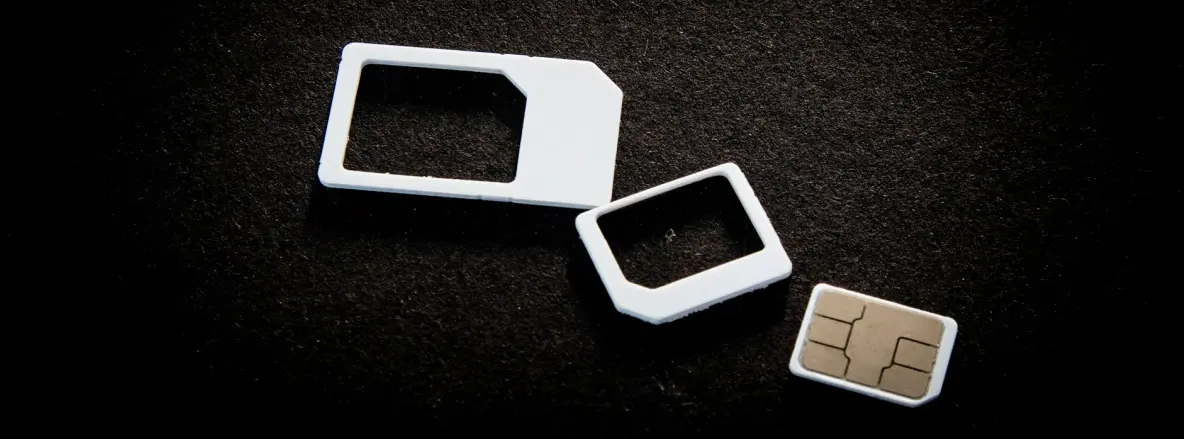
Familiarity: SIM cards have been the standard consumer SIM format for over 30 years. Change on this scale takes time. Customers on a budget, or with limited knowledge or interest in their mobile devices, may be understandably reluctant to transfer to another format. While it’s unlikely that SIM cards will enjoy the same nostalgia-based revival as vinyl records or analog film, the phasing out of SIM cards is a lengthy process. Age, too, plays a factor: eSIM adoption rates are twice as high among 16-24-year-olds as they are among those aged 65 and over.
Affordability: Until very recently, eSIMs were only available on higher-end smartphones. The technology is finding its way onto mid-range and budget handsets as public acceptance of eSIMs continues to grow. Most phones in this market still operate on physical SIM, meaning consumers looking for a cheaper phone remain bound to SIM cards.
Regional differences: Due to countless social, political, and geographic factors, international rates of eSIM uptake have been inconsistent. North America has the highest rate of eSIM usage, with physical SIMs mostly preferred in the MENA, SSA, and APAC regions. Some nations, including China, apply their own legislative restrictions to eSIM technology.
Industrial use: While eSIMs were initially developed for commercial usage, there are still applications in the IoT industry where SIM cards are preferred. IoT SIM cards rarely resemble consumer SIMs – they're usually larger, more durable, and harder to remove. While this makes them more suited to extreme conditions, it’s also part of the reason eSIMs were developed in the first place. Many industrial IoT devices are in inaccessible locations, requiring considerable expense and effort to physically swap SIM cards when required. For older IoT devices, however, SIM cards are still a necessity. In some cases, continuing to replace SIM cards is more practical than replacing entire fleets with eSIM-based models. Some IoT companies now employ a hybrid model of eSIM and card-enabled device fleets, connected to a single service provider. This flexible, scalable approach is only possible with a multi-format IoT connectivity partner like 1GLOBAL.
The eSIM future
Even at this early stage of adoption, eSIMs offer consumers greater ease of use, security, flexibility, and sustainability. As the number of wireless devices continues to grow in the near future, the demand for eSIMs will only accelerate.
Consumer choice will ultimately affect the rate of eSIM uptake across the globe. A recent survey of mobile industry executives by Roland Berger highlights the rise of eSIM as a rare “win-win” scenario for mobile manufacturers, operators, and consumers, confirming the cross-industry benefits of total eSIM adoption. As demand for eSIMs continues to grow, mobile operators must respond to accommodate it. They require a partner with the requisite industry expertise and experience to integrate eSIMs with their network. Embedded SIMs are a technology (the first eSIM-enabled consumer mobiles appeared in 2017); there are only a handful of companies with the ability to do so.
1GLOBAL has been an industry-leading eSIM expert since 2018, offering the agility to provide flexible eSIM solutions for a wide range of clients, and the product expertise and mobile infrastructure of an international MVNO. To find out more about 1GLOBAL Enterprise eSIM services for your organization, contact our team directly.
About 1GLOBAL
1GLOBAL is a distinguished international provider of specialty telecommunications services catering to Global Enterprises, Financial Institutions, IoT, Mobile Operators and Tech & Travel companies. 1GLOBAL is an eSIM pioneer, a fully accredited and GSMA-certified telco, an MVNE, and a full MVNO in ten countries, fully regulated in 42 countries, and covers 190+ countries.
1GLOBAL delivers comprehensive communication solutions that encompass Voice, Data & SMS - all supported by a unique global core network. Its constantly expanding portfolio of advanced products and services includes MVNE services, white label eSIMs, Connectivity Solutions, Compliance and Recording, Consumer & M2M SIM Provisioning and an Entitlement Server.

 is a content specialist and creative copywriter covering tech, IoT, and eSIM topics for 1GLOBAL. Since completing a BSc in Environmental Conservation, he has worked in the arts, science, and NGO sectors. He lives and works in Berlin.
)
)
)

