The iPhone 17 Underlines Apple’s Commitment to eSIM
 Tech & Travel
)
On this page
Share:
- Copy this linkLink copied to clipboard
Share:
- Copy this linkLink copied to clipboard
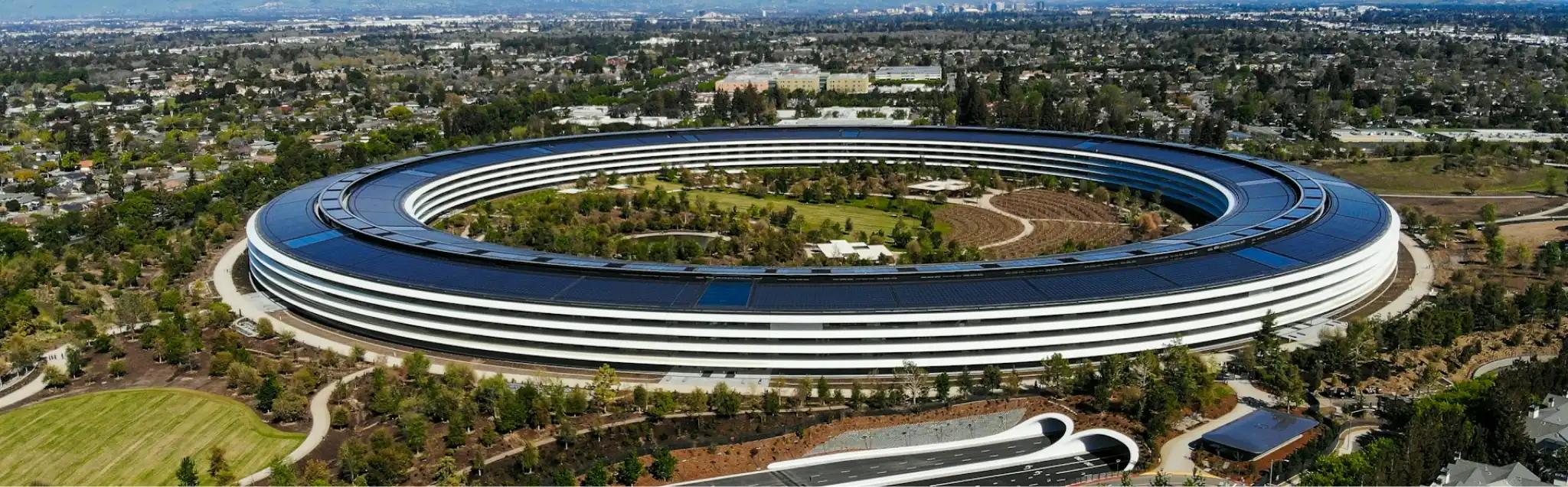
Last week, Apple officially launched the next generation of iPhone and Apple Watch models at their annual Apple Event, livestreamed to a global audience of over two million. Even by their own standards, the 2025 Apple Event was a high-concept spectacle, unveiling multiple new products in a 70-minute showcase at Apple HQ in Cupertino, California.
Summarize this article with AI
The scale of the production was matched by the range of products on show: this was one of Apple’s most significant product launches in years, announcing a new generation of iPhone, Apple Watch, and AirPods Pro, as well as finally unveiling the long-awaited iPhone Air. Apple product launches often function as a barometer of the wider consumer tech world – with four new iPhones and three new Apple Watch models, all supported by new operating systems, the 2025 Apple Event highlighted the pace of change in the mobile technology industry.
Apple is the most valuable technology company in the world, and its new releases simultaneously reflect and shape public demand for mobile technology. Many of the new releases were united by a common thread: a focus on eSIM compatibility.
Apple and the eSIM
Apple first utilized eSIM connectivity in 2017 in the Apple Watch Series 3. While the technology was still relatively new, the limited dimensions of the Apple Watch casing made eSIM a natural choice for connectivity over a bulky plastic SIM card and tray. The next year, eSIM connectivity was introduced as an option in the iPhone XR, iPhone XS, and 3rd-generation iPad Pro.
The release of the first eSIM-only iPhones, the iPhone 14 and iPhone 14 Pro in 2022, marked a watershed moment in public acceptance of eSIM technology. For the first time, the possibility of a truly SIM-card-free phone was introduced to a mass consumer audience.
Device manufacturers like Apple have played a key role in the adoption of eSIMs. While the convenience, security, and flexibility of eSIMs are a clear advantage for consumers, raising awareness of the technology and its benefits among a mass audience has been a longstanding necessity for widespread eSIM adoption.
For mobile hardware manufacturers, eSIMs offer four key advantages:
eSIM as a must-have
As the benefits of eSIM compared to physical SIMs become more widely recognized, eSIM-enabled devices become more desirable. An eSIM smartphone, for most consumers, is a higher-value product than a non-eSIM one.Device design
The mobile device market is highly competitive, with brands seeking to optimize every aspect of their hardware to stand out from the competition. Removing the bulk of a SIM card and tray with an integrated eSIM microchip provides more space to fit in other features like larger batteries or more powerful processors. The new iPad Air is a prime example: at just 5.6mm thick, its existence is only possible through eSIM technology.
Sustainability concerns
Environmental sustainability is a key requirement for the continued success of the mobile industry. Phasing out plastic SIM cards, and the associated environmental toll caused by their manufacturing, transport, packaging, and disposal, is a small step towards creating a truly sustainable mobile ecosystem.
Device adaptability
The reduced size of eSIMs makes them suitable for a wider range of devices and formats outside of smartphones. Integrated eSIM connectivity is now a common sight in tablets, smartwatches and laptops, allowing hardware manufacturers to offer data connectivity across their product suite.
For companies like Apple that develop both hardware devices and mobile operating systems like iOS, eSIMs more easily integrate into a software ecosystem than a physical SIM. This is because they can be continually remotely patched with security and performance updates, allowing them to keep pace with the latest version of the device’s operating system and integrate with external software.
With the release of the iPhone 17, iPhone Air, and the accompanying iOS 26 operating system, Apple has reaffirmed its faith in eSIM as a long-term solution in mobile technology.
The significance of the new Apple Products
The Apple Event saw not one but four new iPhone releases: the iPhone 17, the 17 Pro, the 17 Pro Max, and the long-awaited iPhone Air. Notably, every model in the lineup is available with eSIM connectivity.
Buyers in selected markets, including the UAE and the USA, will be able to purchase eSIM-only versions of these phones with no internal SIM tray. While dual eSIM/SIM card connectivity options have been a standard feature of flagship smartphones for years, the continued release of eSIM-only models of the world’s best-selling smartphone underlines the technology’s growing status.
This concept is encapsulated by the new iPhone Air, which is exclusively available with eSIM. While the eSIM-only iPhone 14 and 14 Pro were US-only models, the iPhone Air is available worldwide.
While eSIMs are gradually supplanting SIM cards in most formats, the iPhone Air is still a significant step forward – the model is already being dubbed the “SIM-card killer”. In contrast to the US-only iPhone 14, the iPhone Air is directly impacting global policy towards eSIM usage.
As a rule, mainland China restricts the sale of eSIM-enabled mobile devices, including the eSIM-only version of the new iPhone 17, Pro, and Pro Max. With no SIM-card alternative, the eSIM-only iPhone Air will be available to purchase in mainland China, marking a momentous advance in the nation’s mobile legislation.
Since the 2017 Apple Watch, the global adoption of eSIM has soared, with the format predicted to overtake SIM cards as the global standard by 2030. The 2025 Apple Event typified this shift with a spate of new eSIM-oriented features across the Apple product catalog. As well as the eSIM-only Air, the new generations of iPhone will also run the iOS 26 operating system, which is tailor-made to support eSIM services.
iOS 26 and eSIM
In our in-depth look at the iOS 26 Beta, we detailed the new eSIM auto-switching feature. Now that iOS 26 is officially available to the public, the new function is already seeing widespread usage among travel eSIM users. These short-term SIM profiles can be downloaded in seconds and used to access mobile data while abroad. Often prepaid, travel eSIMs are a quick solution to roaming fees and the unwelcome “bill shock” incurred by accessing the internet or making calls over an unfamiliar mobile network.
This isn’t the only new iOS update catering to the fast-growing travel eSIM market. New iPhones can store multiple active eSIM profiles, allowing users to divide mobile usage among different profiles for different uses.
When a new eSIM is downloaded to an iPhone running iOS 26, the owner will be asked whether the new eSIM is for domestic or travel usage. If they select travel usage, they will then be able to configure further when and how the travel eSIM is used, for example, setting their travel eSIM to purely data usage and letting their regular eSIM handle phone calls and SMS. By embracing the changing market, Apple has laid down a marker for its competitors and recognized the value of short-term SIM usage.
Apple Watch eSIMs
The new 2025 Apple wearables (the 11th-generation Apple Watch, the Apple Watch SE 3, and the Apple Watch Ultra 3) all feature eSIM connectivity. The option is available on the SE 3 and the core Apple Watch line and comes as standard on the Ultra 3.
The 2025 Apple Event saw the announcement of 5G connectivity for all new Apple Watch models. Again, this emphasizes the growing capability of eSIMs and the hardware that supports them. The worldwide demand for mobile data is growing at a staggering rate, fuelling a booming market in cloud computing and digital infrastructure development. New standards like 5G help to mitigate this demand by providing greater coverage and data speeds on the same spectrum.
1GLOBAL eSIM solutions
While eSIMs only date back to 2012, the eSIM-only iPhone 17 marks the technology’s current ubiquity. Businesses and organizations looking to use eSIMs in their connectivity services require a connectivity partner with the product knowledge to help them leverage this market shift. In such a fast-growing industry, it can be difficult to find a telecoms partner with the requisite level of expertise.
1GLOBAL is a worldwide telecoms provider with over seven years of experience in distributing and managing international eSIM plans for enterprises. With more than 60 million distributed eSIMs and dozens of multinational clients, 1GLOBAL enables organizations to prepare for their digital future.
The growing uptake of eSIMs among organizational and private customers has inspired new eSIM-oriented services from 1GLOBAL that harness every aspect of the technology. From white-label eSIM products to worldwide enterprise connectivity, 1GLOBAL is continually developing new connectivity solutions that are fast, cost-effective, and secure.
About 1GLOBAL
1GLOBAL is a distinguished international provider of specialty telecommunications services catering to Global Enterprises, Financial Institutions, IoT, Mobile Operators and Tech & Travel companies. 1GLOBAL is an eSIM pioneer, a fully accredited and GSMA-certified telco, an MVNE, and a full MVNO in ten countries, fully regulated in 42 countries, and covers 190+ countries.
1GLOBAL delivers comprehensive communication solutions that encompass Voice, Data & SMS - all supported by a unique global core network. Its constantly expanding portfolio of advanced products and services includes MVNE services, white label eSIMs, Connectivity Solutions, Compliance and Recording, Consumer & M2M SIM Provisioning and an Entitlement Server.

 is a content specialist and creative copywriter covering tech, IoT, and eSIM topics for 1GLOBAL. Since completing a BSc in Environmental Conservation, he has worked in the arts, science, and NGO sectors. He lives and works in Berlin.
)
)
)

