How 5G and eSIMs Are Reshaping Network Agility
 Mobile Operators
)
On this page
Share:
- Copy this linkLink copied to clipboard
Share:
- Copy this linkLink copied to clipboard
As 5G connectivity starts to deliver on its long-anticipated promises, a wave of next-gen devices and applications presents a massive challenge to the traditional, physical SIM card model.
Summarize this article with AI
To realize and monetize the new era of connectivity, network operators must embrace the digital-first agility offered by eSIM tech, using platforms like Remote SIM Provisioning (RSP) and Entitlement Servers (ES).
In this article we’re going to take a look at how these pivotal technologies are changing the connected ecosystem using the European markets as context, and what leading operators are doing to take advantage.
Why 5G Needs eSIM
Fifth generation mobile technology wasn’t just an incremental upgrade in speed and bandwidth over its predecessors. It was an exponential leap forward that’s still redefining global connectivity. The scale of the ongoing transformation is huge, with Europe's share of worldwide 5G subscriptions more than doubling from 9% to 19% in just five years.
Subscriptions with 5G access in Europe stood at a modest 83 million as recently as 2022, but are now projected to surpass 4G and become the dominant protocol with more than 500+ million subscribers in 2026, rising to towards the 600 million mark by 2027.
This surge of next-gen connections is consuming an unprecedented volume of data. Researchers expect European 5G networks to move a colossal 312.4 exabytes of traffic by 2027, a more than tenfold increase from 2022 levels.
For some context, the cumulative total of data generated in the whole world only surpassed the one exabyte mark sometime around 2010.
The surge has been driven by a hardware market that's in full transition mode, gearing up to ship an estimated 197+ million 5G-capable devices in 2027, ranging from smartphones and tablets to IoT sensors.
This explosive growth presents a profound challenge: how can network operators possibly manage the logistics of onboarding hundreds of millions of new devices using a model that has barely changed in decades? How many operators, or digitally native businesses in general, can confidently say they’re 312.4 times more strategically capable than their peers in 2010?
Right now, many network operators, businesses, service providers, and IoT providers are finding that there’s an analogue bottleneck on the way to meeting this surging demand and opportunity. It’s the humble physical SIM card, the small piece of plastic that has been the bedrock of connectivity for decades and then was realized to also be its greatest limiting factor.
The Physical SIM Slowdown
The process of manufacturing, programming, packaging, shipping, and manually inserting physical cards is fraught with logistical friction, cost, and delay. It's a supply chain fundamentally at odds with the 5G promise of instant and ubiquitous connectivity.
For the vast and diverse digital ecosystem that 5G enables, populated by everything from wearables to connected cars and massive IoT fleets, the physical SIM model doesn't just slow things down, but breaks it completely. You can't send an engineer to swap a smart meter SIM card that’s embedded in the side of a building, or a speeding autonomous vehicle or, potentially, a cow.
It was at this stage that embedded SIM (eSIM) became not just a convenience but a foundational necessity. The eSIM replaced the entire physical supply chain with the secure, software-based process of Remote SIM Provisioning (RSP). Digitized subscriber profiles, not defined by their hardware, allowed for instant downloading and activation over-the-air (OTA).
This frictionless onboarding is absolutely critical for realizing potential at scale. 5G delivers ultra-fast low-latency networking, but it's the eSIM that provides the agile, scalable, and secure mechanism to get billions of devices on to that network efficiently.
At multiple points up- and down-stream in the data pipeline, the world has moved away from hardware-centric models towards virtualized software solutions. Where the SIM card was once the definitive token of control for MNOs, now connectivity is no longer tied to the distribution of a physical asset. Instead, it lies in the ability to manage a secure digital identity that can be provisioned, updated, or switched remotely and instantly.
This evolution has freed operators to be less like logisticians and more like software companies, prioritizing their user’s experience of activation, flexible plans, and granular tailored services. The product is no longer the SIM card but the network itself.
The Agility Challenge for Operators
For European MNOs, the transition to eSIM-powered 5G presented a raft of challenges. The pressures came from multiple fronts including the constantly mutating range of connected devices, soaring expectations of digitally native consumers stoked by years of waiting for 5G to deliver, and the complexity of the European market itself.
Successful operators have had to become more agile than ever at a time when legacy systems and market fragmentation are acting as powerful anchors.
The sheer variety of devices demanding connectivity is unprecedented, and it’s been a while since the market was just about phones. It's a sprawling range of consumer electronics, wearables, tablets, Vehicle-to-Everything (V2X) connected cars, and vast arrays of arcanely specialised industrial IoT (IIoT) sensors.
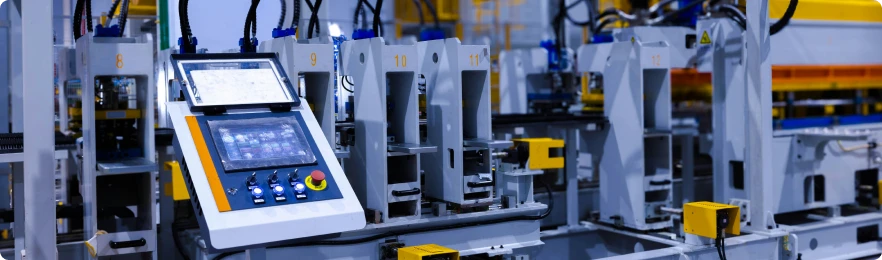
Each of these device categories comes with its own unique OS and connectivity requirements, security profiles, data plans, and lifecycle management needs. At the same time, customer expectations have been permanently set by the ‘one tap magic’ first popularized with the iPhone.
Users now demand instant activation, intuitive multi-device experiences and the freedom to switch services or upgrade devices without friction. The tolerance for waiting for a SIM card to arrive in the mail or spending time on a customer support call to activate a new device has essentially reached zero.
The pressure has been intense for European operators. Unlike the monolithic markets of the US or China, Europe's telecom landscape is fragmented into hundreds of different operators competing across the continent. This dynamic environment drives down prices and limits scale for any single MNO, which in turn constrains their ability to invest.
According to the European Commission, investment in European digital infrastructure runs at about half that of the US, putting local operators at a significant disadvantage in the global race to build out advanced 5G networks and accompanying back-end systems. This spending gap is compounded by a comparatively cautious and complex regulatory environment, with delays over spectrum allocation and divergent national policy hindering the creation of a cohesive, Union-wide 5G strategy.
Arguably the greatest single hurdle is within the network operators' own tech stacks. Many still operate Business Support Systems (BSS) and Customer Relationship Management (CRM) platforms designed for physical SIMs and simpler static service plans.
These legacy systems aren’t set up to handle the real-time and API-driven demands of eSIM provisioning and 5G service management. Attempting to integrate modern platforms for eSIM and entitlement management with these older systems is complex and expensive. All but the most expertly executed integrations will almost certainly disrupt core business functions like billing, customer service, and network operations, disincentivizing operators from keeping up with the forefront of the market.
All these factors illustrated that the primary challenge for European MNOs is not one of tech adoption, but a more entrenched obstacle of organizational agility. Legacy architecture, fragmented markets, and ponderous jurisdictions are not compatible with the speed and scale of global OEMs and software giants. An MNO simply can’t respond to immediate demand for the newest wearables if its internal BSS integration and testing cycle takes months to complete.
This creates a powerful and urgent need for solutions that can act as an agility layer, a way to abstract away the internal complexity and enable operators to meet the relentlessly evolving demands of the market.
RSP and ES Powering Agility
To get agile, MNOs need a new set of tools specifically designed for the 5G era. The two foundational technologies that have proven capable are Remote SIM Provisioning (RSP) and the Entitlement Server (ES). Treated as one system, they are the agility fabric for 5G.
Remote SIM Provisioning is the secure, digital supply chain for connectivity. It's the engine that replaces the logistics of physical cards with a standardized, over-the-air process governed by the GSMA.
There are three relevant GSMA specifications:
Consumer eSIM (SGP.22). The Subscription Manager – Data Preparation Plus (SM-DP+) securely prepares, encrypts, stores, and delivers operator profiles directly to devices. In this consumer architecture there is no SM-SR component; profile preparation and secure delivery are merged in the SM-DP+.
M2M/IoT eSIM (SGP.02). Functions are split between SM-DP (profile data preparation) and SM-SR (secure routing and lifecycle management), aligned to embedded deployments that are often headless and controlled remotely.
Consumer IoT (SGP.32). A newer standard that extends consumer-grade flexibility to IoT OEMs, enabling large-scale deployments where devices can download, switch, and manage profiles while preserving security and interoperability.
All RSP systems that touch operator credentials are underpinned by the GSMA’s SAS-SM accreditation. SAS-SM restricts operations to audited, certified facilities and processes and sets strict controls around key management, profile generation, storage, and distribution. The result is integrity of operator credentials, protection against leakage and fraud, and global interoperability.
1GLOBAL’s modern RSP platform goes beyond baseline compliance. It supports dynamic profile adaptation, so a subscription can present device-appropriate capabilities as hardware and networks evolve. In practice, it delivers smooth support as markets shift from 5G NSA to 5G SA; continued compatibility as OEMs change modem stacks; readiness for features like network slicing or new authentication modes without ripping and replacing installed bases.
Resilience patterns matter too: bootstrap + operational profiles and multi-IMSI strategies ensure devices have at least one viable network route, with policy-driven switches to optimize coverage, latency, or commercial terms.
While the RSP securely delivers digital profile to the device, it’s the Entitlement Server that gatekeeps what that profile is actually allowed to do. The ES acts as a critical agility layer, sitting between the riotously evolving world of end-user devices and the operator's comparatively more ordered and slow-moving core network hardware.
The ES is the orchestration layer that negotiates, authorizes, and configures device-specific services so they work first time, every time.
Instead of forcing a BSS to “know” the quirks of every phone, watch, tablet, or car, ES abstracts that complexity behind clean, modern APIs. Outwardly, it speaks the device’s language, while inwardly it talks so that the operator can understand. Typical capabilities of the ES include:
Advanced 5G services. Entitlements for VoNR, VoLTE, VoWiFi, carrier aggregation, and network slicing. These are not just flags; many involve device capability checks, policy logic, and timed provisioning sequences.
Multi-device experiences. Watch pairing and family plans; shared-number and multiline subscriptions across phone, tablet, and wearable; companion device flows that minimize user steps.
Lifecycle and retention. eSIM transfer and restore flows that make upgrades painless. Users keep continuity; operators reduce calls and churn.
Messaging evolution. RCS enablement where device ecosystems rely on operator-branded messaging.
Zero-Touch onboarding. True automatic activation in which profiles and entitlements are pushed and configured without QR codes, manual entry, or store visits. The device comes online ready to use with the right policies applied.
The 1GLOBAL Entitlement Server is cloud-native, delivering scalability, resilience, and rapid deployment without Capex-heavy infrastructure. It evolves in step with OEM releases and 5G feature rollouts, ensuring operators keep pace with the market.
It's important to appreciate RSP and ES not as independent systems but two halves of a holistic solution. An operator with an RSP platform alone can deliver an eSIM profile, but they’ll struggle to implement the complex, multi-device services that consumers expect. Meanwhile, the ES provides the orchestration and gatekeeping that makes the RSP-supplied profile competitive. An MNO needs both to deliver a modern, competitive, and profitable customer experience.
Why This Matters Now
The shift toward eSIM-powered 5G hasn’t happened in a vacuum. It's being accelerated by powerful market forces that should be clear to every MNO in Europe. The window for strategic adaptation is closing, and the cost of inaction is rising daily. The question is not if digital transformation is needed, but whether operators are going to get ahead of it or wait for their whole business model to fall apart first.
The drive to embrace network agility can be grouped into three general trends: the strategy of OEMs, the evolving needs of enterprise, and the demands of modern consumers.
Major device manufacturers, led by industry titans like Apple, have committed to the eSIM-only future, particularly since the recent launch of the eSIM-only iPhone Air 17. On the day that all flagship phones ship without a physical tray, operators will face a simple choice to either provide a reliable user-friendly eSIM activation and management experience, or be incompatible with the most sought-after consumer product in the world.
Simultaneously, the commercial enterprise opportunities have never been greater. Business across Europe has deployed vast and growing fleets of connected devices on a global scale. This includes everything from home-hubs to sophisticated IoT sensors embedded in supply chains, vehicles, industrial equipment and farm animals. These enterprises require a centralized, scalable, and cost-effective way to manage connectivity across dozens of countries and multiple networks.
The old model of sourcing local physical SIM cards for each region was an administrative and logistical non-starter. eSIM, combined with a powerful remote provisioning platform, was proven as the only viable solution for this massive and rapidly expanding B2B market. Operators who can offer sophisticated, API-driven eSIM management platforms are perfectly positioned to capture this high-value enterprise revenue and become strategic partners in their clients' digital transformation.
Finally, modern subscribers expect their digital lives to be integrated and effortless or they will take their custom elsewhere. Upgrading to a new phone, adding a smartwatch, or switching providers all needs to be done with the same one-click intuitive ease as downloading an app. The ability to eSIM transfer and the assurance of interoperability across brands and generations, knowing that their new device will work with their chosen plan, are basic features and will directly impact customer satisfaction and loyalty.
Operators who fail to provide this frictionless experience will be perceived as outdated, cumbersome, and difficult to do business with, creating a significant competitive disadvantage. It’s worth noting that this exact same attitude now also applies to new employees when being equipped and onboarded by their employer.
These trends converged to create an inflection point for the telco industry. The move to eSIM represented a reframing of priorities. The traditional physical token of control that MNOs have relied on for decades, along with device subsidy lock-in, and the nuisance of switching providers, are all but vanished. Operators found themselves redefining their role and value proposition in a virtualized and software-defined market, evolving from custodians and physical logisticians to becoming enablers of digital experiences.
The MNOs that are thriving in this new environment are those who leveraged RSP and ES to build the most flexible, user-friendly, and reliable service layer on top of their network infrastructure. Those that still haven’t are finding themselves competing solely on price, which is a race to the bottom in a commoditized market.
The European Lens: Agility as Advantage
The European market for 5G amplifies both the vast opportunity that exists, but also the potential friction that can arise. Fragmented markets, uneven regulation, and lagging infrastructure mean that executing a coherent network agility is non-negotiable for MNOs. Platforms that are able to standardize best practices and abstract complexity enable operators to launch faster, serve better, and scale more seamlessly across borders.
Success in this realm relies as much on delivery discipline as on technology. Operators should increasingly treat profiles as cloud assets, automate certain processes, and inject subscriber data only when needed in order to streamline processes and shorten lead times. Operators should also use bootstrap profiles with multi-IMSI to ensure reliable connectivity and maintain strong observability and security across systems.
RSP and ES should be treated as essential engines for revenue growth, rather than cost burdens that are a drag on overheads. Tiered entitlements like VoNR, Wi-Fi Calling, and international roaming can power premium plans. Companion bundles can make watches and tablets a highly valuable revenue driver for operators, while also helping to strengthen customer loyalty and reduce churn. Enterprise APIs for provisioning, audit, and policy control can also open new B2B revenue streams, especially in regulated sectors. Finally, vertical or travel-focused solutions, be they for logistics, healthcare, or roaming identities, can turn connectivity into an easily packaged, Zero-Touch service.
When this model works, the customer experience speaks for itself:
A user activates a new phone in minutes: no shop visit required, no need for a QR code to be generated.
A parent adds a child’s smartwatch line from an app: seamless, secure, and ready to go before the school bell rings.
An OEM ships tens of thousands of sensors globally: each is automatically bootstrapped to the best route without customs delays or, indeed, any plastic waste.
Operators adopting these patterns report higher activation satisfaction, fewer store visits, faster proposition launches, and cleaner audit trails. And perhaps most importantly, they gain creative freedom: when connectivity is instant and programmable, product teams can finally design experiences that take such automation for granted, rather than work around its absence.
Where 1GLOBAL comes in
Navigating the complexities of transitioning to eSIM-powered 5G requires more than just the right tech and hardware. It requires a partner with deep expertise, proven solutions, and a fundamental understanding of a network operator's world. At 1GLOBAL, we provide the complete integrated solution stack that MNOs and enterprises need to master this new generation of connectivity and turn it into a powerful competitive advantage.
We offer the full stack, from the secure foundation to the intelligent service layer.
This includes our own GSMA SAS-SM certified Remote SIM Provisioning (RSP) platform, designed for both consumer and M2M/IoT use cases, and a powerful, cloud-native Entitlement Server. Our partners benefit from a single, streamlined commercial agreement and a unified technical framework, dramatically reducing integration complexity and accelerating their time-to-market for new services.
1GLOBAL is built by operators for operators. Our insight is that of a network operator, not just a technology vendor. We have first-hand experience with the real-world operational challenges, the legacy integration pain points, and the intense competitive pressures our clients face every day.
This deep understanding is evidenced in all of our solutions, which are engineered for carrier-grade reliability, massive scalability, and uncompromising security. It's why we're trusted by leading MNOs and more than 3,500 corporate clients around the world to power their most business-critical connectivity services.
Our platforms are proven at a global scale. Today, 1GLOBAL's tech manages over 60 million SIM connections and facilitates the creation of 50,000 new profiles every day. We recognize that every operator has unique needs, which is why we offer flexible deployment models including cloud, on-premises, or a hybrid approach to meet the specific policy, security, and regulatory requirements of our clients across different jurisdictions.
Our trailblazing API-first framework ensures our solutions can be easily and seamlessly integrated into our clients' existing workflows and BSS/OSS environments. This empowers them to automate processes, launch innovative services faster, and build the agile, responsive, and customer-centric operations that the future of connectivity demands.
The convergence of 5G and eSIM has redefined the concept of network agility. With 1GLOBAL as your partner, you gain access to the technology, expertise, and experience needed to not only navigate this digital transformation but to lead it.
Contact 1GLOBAL today to learn how you can gain certified infrastructure, a cloud-native agility layer, and hard-won operator insight with our software solutions. Our software is built by us, an operator, for other operators, and so our platforms provide you with the perfect control plane to meet today’s connectivity expectations.
About 1GLOBAL
1GLOBAL is a distinguished international provider of specialty telecommunications services catering to Global Enterprises, Financial Institutions, IoT, Mobile Operators and Tech & Travel companies. 1GLOBAL is an eSIM pioneer, a fully accredited and GSMA-certified telco, an MVNE, and a full MVNO in ten countries, fully regulated in 42 countries, and covers 190+ countries.
1GLOBAL delivers comprehensive communication solutions that encompass Voice, Data & SMS - all supported by a unique global core network. Its constantly expanding portfolio of advanced products and services includes MVNE services, white label eSIMs, Connectivity Solutions, Compliance and Recording, Consumer & M2M SIM Provisioning and an Entitlement Server.

 is an extensively experienced creative who has worked as a lead copywriter for numerous global clients and international household names, working on through-the-line projects, creative copy, ideation, content, marketing and brand activation for highly diverse industries in the business world. Duncan's career has included almost every sector imaginable, particularly across the tech space, making his news and industry analysis focused on eSIM, IoT and business connectivity both well-informed and engaging.
 )
)
)

